
If your windshield is cracked or damaged, the first question that comes to mind is simple: OEM vs aftermarket windshield which one should you choose? The answer is not just about price. It affects your safety, visibility, and long-term driving experience.
At Texas Reliable Auto Glass, we’ve helped thousands of drivers make the right choice based on real-world needs, not just theory. Whether you’re dealing with a small crack or a full replacement, understanding your options can save you time, money, and stress. In this guide, you’ll learn the real difference between OEM vs aftermarket windshield, when each option makes sense, and how to choose what’s best for your car.
Quick Answer | OEM vs Aftermarket Windshield
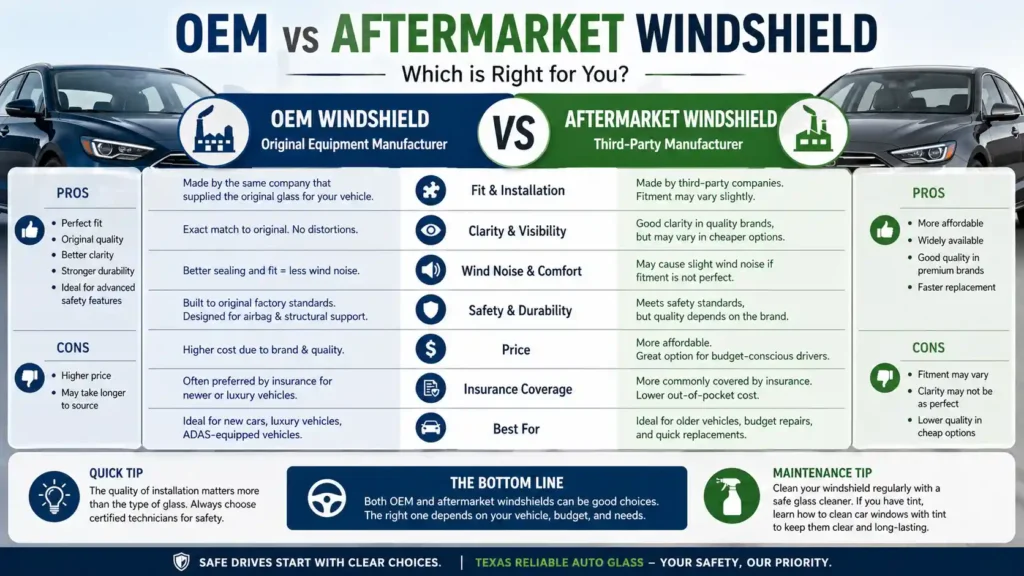
- OEM windshield = Same manufacturer, best fit, higher cost
- Aftermarket windshield = Third-party, budget-friendly, quality varies
- Best choice = depends on your car, budget, and safety needs
What “OEM” and “Aftermarket” Really Mean
OEM Windshield (Original Equipment Manufacturer) Explained
When people ask what is OEM windshield, the simple answer is this: it’s the same glass that originally came with your car from the factory. OEM windshield glass is made by the same manufacturer that supplies the automaker.
This means the shape, thickness, and clarity match your original windshield exactly. At Texas Reliable Auto Glass, we often recommend OEM glass for drivers who want factory-level fit and performance.
Aftermarket Windshield Explained
If you’re wondering what is an aftermarket windshield, it refers to glass made by a different company, not the original manufacturer. These companies follow safety standards but may use different materials or processes.
In simple terms, aftermarket glass is designed to fit your car, but it may not be identical.
Key Differences in Simple Words
- OEM = factory match
- Aftermarket = alternative option
- Both are safe if installed correctly
What is an OEM Windshield?
Key Features of OEM Auto Glass
OEM windshield glass is known for consistency and precision. Here’s what makes it different:
- Exact fit with no adjustments
- Same thickness and strength as original
- Clear visibility without distortion
- Designed for your specific vehicle
Pros of OEM Windshield
- Perfect alignment with your car
- Best clarity and driving comfort
- Ideal for vehicles with advanced sensors
Cons of OEM Windshield
- Higher cost
- Limited availability for some models
- Insurance may not always cover it fully
What is an Aftermarket Windshield?
Types of Aftermarket Windshields
Not all aftermarket glass is the same. There are two main types:
- Premium aftermarket (better quality, close to OEM)
- Standard aftermarket (budget option)
Understanding what is an aftermarket windshield helps you choose the right quality level.
Pros of Aftermarket Windshield
- More affordable
- Easily available
- Good option for older vehicles
Cons of Aftermarket Windshield
- Slight variation in fit
- Possible minor distortion in some cases
- Quality depends on manufacturer
OEM vs Aftermarket Windshield | Key Differences That Matter
Fit and Installation Accuracy
OEM glass fits perfectly without adjustments. Aftermarket glass may need minor fitting changes, depending on quality.
Glass Clarity and Driving Visibility
OEM usually offers the clearest view. Some aftermarket options may have slight visual distortion, especially at the edges.
Wind Noise and Comfort
Poor fit can lead to wind noise. High-quality aftermarket glass performs well, but low-quality options may not seal perfectly.
Durability and Strength
Both types meet safety standards, but OEM windshield glass often has more consistent durability.
Price and Value Comparison
This is where windshield replacement OEM vs aftermarket becomes important:
- OEM = higher upfront cost
- Aftermarket = lower cost, better for budget
Safety Matters | Which Windshield is Better?
Role of Windshield in Airbag Deployment
Your windshield supports airbag deployment. A poorly installed windshield can affect how airbags work in an accident.
Crash Safety and Structural Support
The windshield helps maintain your car’s structural strength. That’s why proper installation matters more than glass type.
ADAS & Sensor Calibration Issues
Modern cars use sensors for safety systems. OEM glass works seamlessly, while aftermarket glass may require extra calibration.
OEM vs Aftermarket Windshield Cost Breakdown
Average OEM Windshield Cost
OEM replacements can range from $800 to $2000+, depending on the vehicle and features.
Average Aftermarket Windshield Cost
Aftermarket options usually cost 30–50% less, making them a popular choice.
What Affects Windshield Replacement Cost?
- Vehicle type
- Sensors and cameras
- Labor and installation quality
If you’re looking for reliable service, check Windshield Replacement Austin TX to understand real pricing and options.
Insurance Coverage | OEM vs Aftermarket Glass
Does Insurance Cover OEM Windshield?
Most insurance companies prefer aftermarket glass to reduce costs. OEM coverage may require special requests.
How to Request OEM Replacement
You can ask your insurer for OEM glass, but you may need to pay the difference.
Out-of-Pocket Cost Differences
OEM usually costs more out-of-pocket, while aftermarket keeps expenses lower.
When Should You Choose OEM Windshield?
Best Use Cases
- New or luxury vehicles
- Cars with advanced safety systems
- Long-term ownership plans
If your car relies heavily on sensors, OEM windshield glass is often the safer choice.
When Should You Choose an Aftermarket Windshield?
Best Use Cases
- Older vehicles
- Budget-friendly repairs
- Quick replacements
Understanding what is an aftermarket windshield helps you make a smart, cost-effective decision.
Real-World Differences Drivers Actually Notice
Visibility While Driving
Most drivers won’t notice a difference unless the aftermarket glass is low quality.
Noise at High Speed
Improper sealing can lead to wind noise. This is more about installation than the glass itself.
Long-Term Performance
OEM glass tends to stay consistent over time, while aftermarket performance depends on quality.
Common Myths About OEM and Aftermarket Windshields
Myth: Aftermarket Glass is Unsafe
False. High-quality aftermarket glass meets safety standards.
Myth: OEM is Always Better
Not always. For many drivers, the aftermarket is a practical choice.
Myth: All Aftermarket Glass is Low Quality
There are premium aftermarket options that perform very close to OEM.
Getting a Quality Windshield Installation
Why Installation Matters More Than Glass Type
Even the best glass will fail if installed poorly. Proper sealing is critical.
Importance of Certified Technicians
Experienced technicians ensure correct fitting and safety.
Post-Installation Safety Checks
Always check for leaks, noise, and proper alignment after installation.
At Texas Reliable Auto Glass, every installation follows strict quality checks to ensure long-term performance.
How to Choose the Right Windshield for Your Car
Simple Decision Checklist
- Budget
- Safety needs
- Vehicle type
- Driving conditions
Also, don’t forget maintenance. Knowing how to clean car windows with tint helps protect your windshield and keep visibility clear. Use a soft cloth and ammonia-free cleaner to avoid damage.
Final Thought
Choosing between OEM vs aftermarket windshield doesn’t have to be confusing. The right decision depends on your car, your budget, and your safety priorities.
If you’re unsure, the best step is to talk to experts who deal with this every day. At Texas Reliable Auto Glass, we guide you honestly and help you choose what truly fits your needs. Contact us today to get expert advice and reliable windshield replacement you can trust.
Frequently Asked Questions
Is OEM windshield worth the extra cost?
Yes, especially for new cars or vehicles with advanced sensors. OEM ensures perfect fit and compatibility.
Can aftermarket windshield affect resale value?
In most cases, no. However, some buyers prefer OEM windshield glass for high-end vehicles.
Do aftermarket windshields crack easier?
Not necessarily. High-quality aftermarket options are durable and meet safety standards.
Will sensors work with aftermarket glass?
Yes, but calibration may be required. This is important in windshield replacement OEM vs aftermarket decisions.
How to tell if a windshield is OEM or aftermarket?
Check the logo on the glass. OEM usually has the car brand logo, while aftermarket does not.