
If you already opened this article because the car window fogged up! question, then you’re right this phenomenon is irritating on the road, where visibility is important for our own drivers and others. A lot of drivers have this question on their mind, Why Are My Car Windows Fogging Up Inside? It’s not just a nuisance when condensation shows up on the inside of your car’s windows, but it can also be a hazard by limiting your line of sight. So, indeed, it can occur in both summer and winter, and it’s a mystery to drivers, even if there is a possibility of causing the accident.
The good news is, once you know how window fog forms and what makes your car too moist, you’ll have an easier time stopping and dealing with it.
What Causes Car Windows to Fog Up Inside?
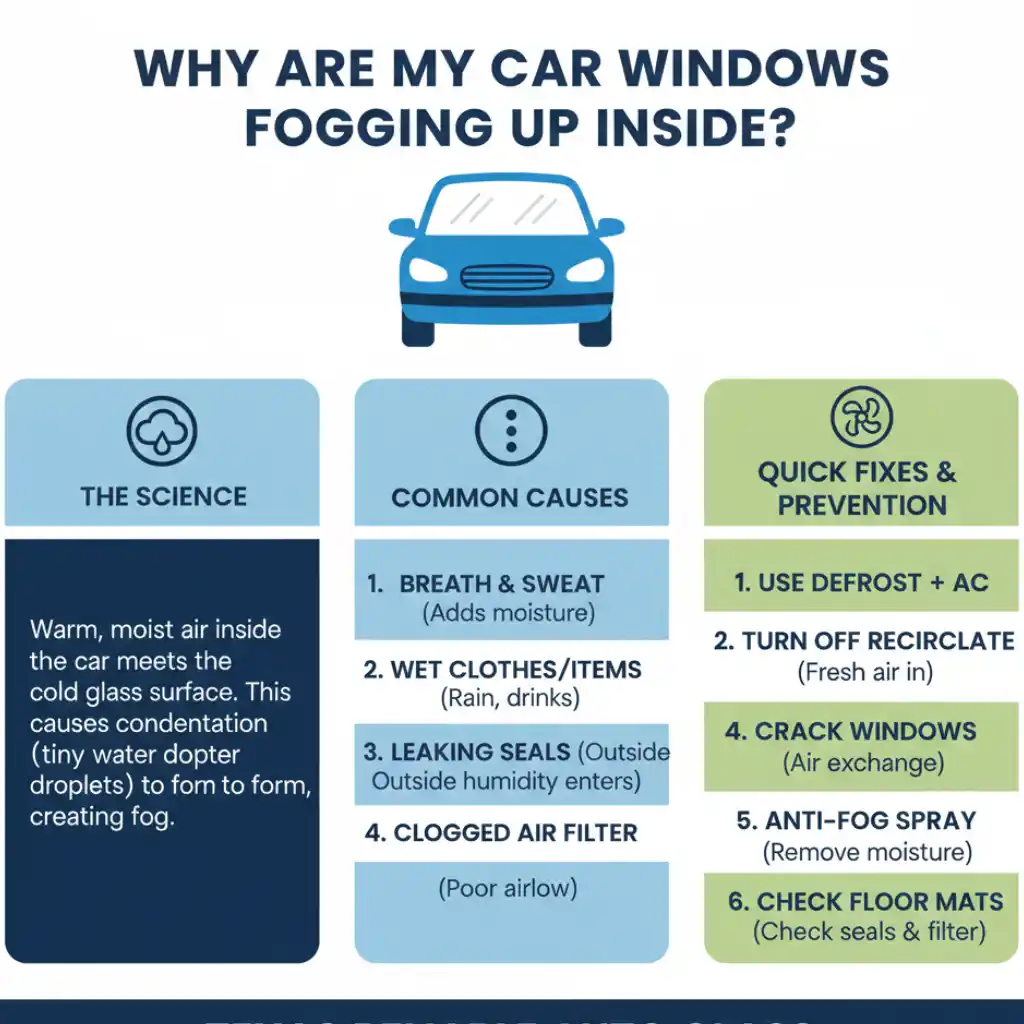
The main cause of car windows fogging up inside is warm, moist air in your vehicle. Many people notice their car windows fog up immediately after they start driving, and it’s easy to understand why moisture is constantly collecting on the inside of your cabin, even on the shortest of rides.
You don’t realize how much moisture you carry into your car every day from doing daily things. Wet clothing, damp shoes, rain-soaked umbrellas, and even the humidity in your breath are all contributing factors to an over-moisturized cabin. Your car’s HVAC system is no exception. When the recirculation mode is on, it just raises the humidity inside the car and contributes to fog formation in the car. After identifying these issuers, you will see the effect of the wave and the Correction to expect will become clearer.
Why Are My Car Windows Fogging Up Inside Even With the AC On?
You may long for the air conditioner when summer days come, but this is what nobody says: you still have to deal with fog. Why do windows fog up in car reviewers often ask this question, wondering if it’s related to the car using AC or heaters. It’s usually due to system imbalances or maintenance needs. Below are the leading drivers of this condition:
1. A Failing AC Compressor
Now that you have tested the relay, let’s test the AC compressor motor. Your air conditioner does more than just blow cold air it also removes moisture from the air inside your car or truck. When your AC compressor isn’t working right and isn’t compressing air as it should, it can’t dry the air. Humid air gets trapped inside the car and condenses on the windows when temperature changes occur. It’s
one of the main reasons why even experienced drivers find their windows fogging up when the heat’s on.
2. Clogged Cabin Air Filter
Smoky odors and particles linger in your ductwork and may eventually be released into your living space. When the cabin door doesn’t open to let fresh air in, the air inside gets humid and clings to the windows. No wonder you can even get fog on the glass when the AC is cranked up full blast, and it really won’t go away.
3. Blocked AC Drain Line
While cooling the air in the vehicle, the air conditioner also generates water, which needs to be drained via a tube. When it is plugged in, moisture builds up in the vehicle, creating a very humid environment. This is also because car windows fogging up inside can occur even on dry days, and it always has drivers scratching their heads.
Why Do Car Windows Fog Up During the Summer?

People- get the fog up, fogging is a winter problem, but summer sports traffic, you get fogged up. Warm Side of the Windshield: Here is why this occurs on the warm side ofthe windshield:
- High Outdoor Humidity: The warmer the air is, the more water vapor it can hold. Humid air condenses so fast on the frozen glass as soon as humid air enters the car.
- Rapid Temperature Drops: You may have a very hot inside of your car after leaving it out in the sun. With the sudden temperature change in the air conditioner, condensation is being produced on the cold glass.
- Wet Items Inside the Car: Your gym bag, bath towel, swimming gear, and your dirty laundry all bring water into your vehicle when the windows are chilled, that moist fog up the windows.
Other Lesser-Known Summer Causes
- Poor Internal Ventilation – Inside Car. When these are closed or covered, moist air is trapped inside your vehicle. No air circulation makes it condense on windows, particularly with the air conditioner in use.
- HVAC Problems – A coolant leaking heater core or blend dags, blower motors, and evaporator coils may also cause moisture within your air system.
- Lingering Moisture From Rain – That little bit of water you carry inside on your shoes and pants legs can evaporate inside a car with the windows up. It’s just moisture, which, at the end of the day, builds up on glass in a way that makes you wonder how you managed without it.
How to Clear Foggy Car Windows Fast
Fog is dangerous because it can restrict visibility. How To Get Rid of It
- Turn on the Defroster: Warm, dry air from your heater melts the ice on the inside of your windshield as warm air from outside works to defrost it on the outside. “That’s the best way to prevent fog from forming inside your car,” says Keating.
- Turn Off Recirculation: Any time you shove a bunch of people into a small space, whether it’s a car or a room, moisture condenses on the cold surfaces. A fan and air conditioning can facilitate the taking down of the medicine as well.
- Use Heater and AC Together: Use your heater to melt the ice on your windshield, and your AC to take the moisture out of the air. Several systems working together have a much greater combined effect in preventing moisture condensation than the use of one system alone.
- Crack the Windows Slightly: Oh, great, it looks like all that happened with the food is going to happen in the car. Just a tiny rim light on the window is enough to push out some warm air and bring some cool air inside.
You can read about: How to Get Rid of Foggy Windows
How to Prevent Fogging Inside Your Car
“Prevention is better than cure” really applies to fog. A little TLC every day can have a real impact on how clean your windows can remain:
- Clean Your Windows Regularly: Dust and dirt hold moisture, and foul glass fogs up faster. Standard foul glass is to fo,then de-fog.
- Remove Wet Items Immediately: A wet make-up pad, towel, or piece of clothing contributes to moisture in a sealed space. Heat them, or you can bring them if necessary.
- Replace the Cabin Air Filter: When the flow of air is blocked because a filter is dirty, the air just doesn’t get as warm on a cold day or as cool on a hot day, and it helps keep the moisture out of the car’s air conditioning system.
- Inspect Door and Window Seals: these too, can become worn and allow moisture into the cabin. Changing prevents leakage and fogging.
When to Seek Professional Assistance
Although most fogging problems can be resolved by following a few straightforward steps, some symptoms suggest a more serious issue. You should consult a professional if you see:
- Persistent fogging despite adequate ventilation
- Musty Odours in the Cabin of the Car
- Wet patches without an apparent source
- HVAC system not turned on properly
Taking care of these problems early stops mold growth, electrical problems, and repair expenses.If you notice any of these warning signs, do not ignore them. Contact Derks Plumbing today for a thorough inspection and expert solution. Our team can identify hidden moisture issues and prevent costly damage before it spreads. For complete glass-related concerns, you can also explore our services of Window Repair in Austin to ensure your vehicle stays safe, clear, and protected on the road.

Conclusion
Knowing the answer to the question of why my car windows fog up inside is the key to safe and comfortable driving. Cold temperatures, high moisture, lack of ventilation, and even a malfunctioning air conditioner can cause the glass to fog up. The good news is that a little basic car maintenance and a few simple habits can keep your windows clear so you’ll have better visibility on the road all year long, no matter what Mother Nature decides to do. Clean glass, good ventilation, and moisture control that’s the recipe to keep your windshield fog-free all year long.
FAQs
Are the windows dirtier, the more it fogs up?
Yes. Dust, salt, and other grime ‘capture’ moisture on the windows, which are then more likely to form condensation.
Does cracking a window help with fogging it?
Absolutely. Letting out a small bit of crack will get that humid air out while letting in some drier air from outside, which likewise will help get the condensation off quicker.
Why does my car still get fogged up if it’s been sitting all night?
Moisture from the carpets, seats, or mats of a vacuumed-up car rises inside the car, and it builds up on the windows.
Can I use AC to prevent interior fog formation?
It’s just fine as long as you’ve got your ac/vent system on (preferably not recirculating inside). It also pulls the moisture out of the air to help prevent condensation.
Why do they fog up in the summer?
Warm air, high humidity, wet clothes in the car, and rapid cooling down after driving with the a/c running are some of the drivers of summer fog.
Does a dirty air filter cause fog in a car?
Yes, it does. A clogged filter impeded airflow and restricted your HVAC’s ability to properly dehumidify.