


A sunroof adds comfort to your drive by letting in fresh air and natural light. But when heavy rain begins and water suddenly appears inside the car, it can quickly become frustrating. Many drivers start asking the same question: why does my sunroof leak in heavy rain?
In most vehicles, a sunroof is not completely waterproof. It uses rubber seals and sunroof drain tubes to guide rainwater away from the roof and safely outside the car. When these drains clog or the seals wear out, water may enter the cabin. At Texas Reliable Auto Glass, technicians often see this issue after storms, and in many cases, the problem has a simple fix.
Is It Normal for a Sunroof to Leak in Heavy Rain?
Many drivers believe a sunroof should seal completely like a windshield. In reality, sunroofs work differently.
Even when closed, a small amount of water can pass around the edges of the glass. The car’s design handles this water through a controlled drainage system. According to technicians at Texas Reliable Auto Glass, most modern sunroofs rely on drain channels and tubes to guide water safely out of the vehicle instead of sealing it completely like a windshield.
How a Sunroof Drain System Works
A sunroof has several built-in components that manage rainwater safely.
Sunroof Seals
Rubber seals sit around the glass panel. Their main job is to reduce wind noise and prevent large amounts of water from entering the sunroof frame.
Drain Channels
Around the sunroof frame are small channels that collect rainwater that slips past the seals.
Sunroof Drain Tubes
These small tubes run down the pillars of the vehicle and carry water from the roof to the bottom of the car. When the sunroof drain tubes are clean and working properly, water exits the vehicle without entering the cabin.
This design works well in normal conditions. However, if debris blocks the drains or seals wear out, the system cannot move water away fast enough.
When a Sunroof Leak Becomes a Real Problem
A small amount of moisture around the sunroof frame is normal, but water inside the car is not.
Common warning signs include:
- Water dripping from the roof or overhead console
- Wet seats or a damp headliner
- Moisture smell inside the cabin
- Water stains around the sunroof opening
When these symptoms appear, the sunroof leaking issue usually means the drainage system is blocked or a seal has failed.
Most Common Reasons a Sunroof Leaks During Heavy Rain
When drivers ask why does my sunroof leak in heavy rain, the answer usually comes down to a few mechanical problems. Understanding these causes helps you identify the right solution.
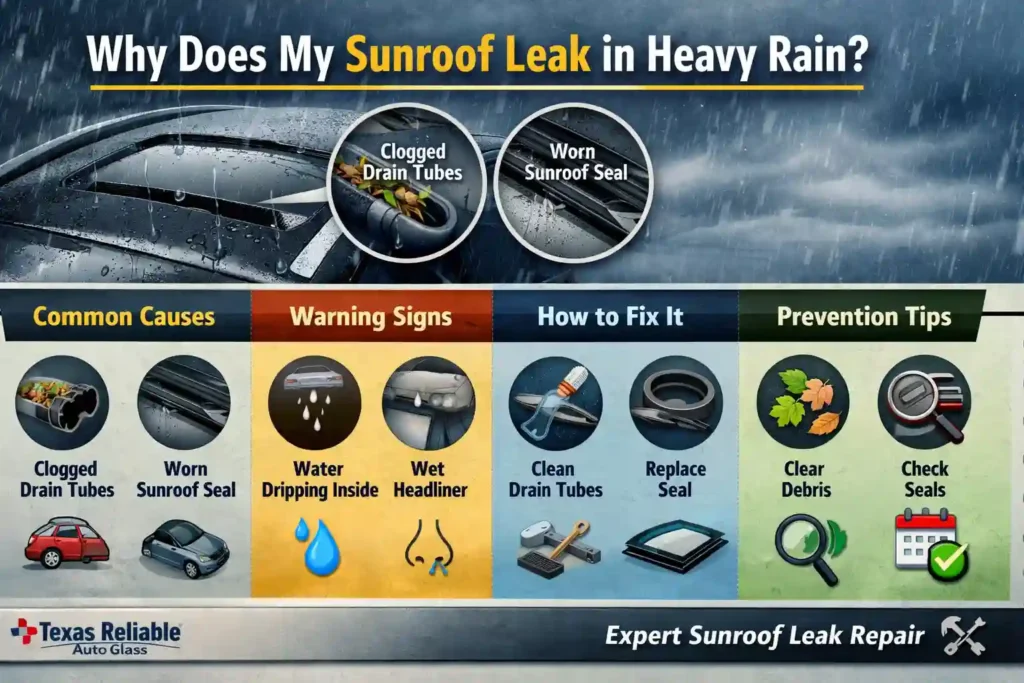
Clogged Sunroof Drain Tubes
This is the most common cause of a sunroof leaking problem.
Leaves, dust, pollen, and small debris can collect in the drainage channels. Over time, they block the sunroof drain tubes and prevent water from flowing out of the vehicle.
When heavy rain hits, the water has nowhere to go. Instead, it overflows into the headliner and begins dripping into the cabin.
Blocked drains are also one of the easiest problems to fix, which is why regular maintenance is important.
Worn or Damaged Sunroof Seal
Rubber seals naturally wear down over time due to sunlight, temperature changes, and aging.
A damaged seal may develop:
- Small cracks
- Hard or brittle areas
- Gaps around the glass panel
When this happens, water can enter the frame faster than the drainage system can handle. This leads to interior moisture and sometimes requires sunroof leak repair.
Misaligned Sunroof Glass
If the sunroof glass does not sit evenly in its frame, small gaps can form around the edges.
This misalignment may happen because of:
- Mechanical wear in the track
- Previous repair work
- Impact or vibration while driving
Even a small gap can allow rainwater to bypass the drainage channels, which eventually leads to a sunroof leaking problem.
Broken or Disconnected Drain Hose
Inside the roof structure, the sunroof drain tubes connect to hoses that guide water through the vehicle pillars.
If these hoses become disconnected or damaged, water may leak into the roof lining instead of exiting the vehicle.
This type of issue usually requires professional sunroof leak repair because the headliner must be partially removed to access the tubing.
Poor Installation or Previous Repair
Sometimes a leak begins after glass replacement or previous repair work.
Improper installation can lead to:
- Loose sunroof frames
- Misaligned tracks
- Incorrect sealing materials
When this happens, professional inspection becomes necessary to diagnose the issue correctly.
Signs Your Sunroof Drain Is Blocked
A blocked drainage system often shows clear warning signs before the problem becomes serious.
Drivers should watch for these symptoms:
- Water dripping from interior lights
- Wet carpet after rainfall
- Water stains on the headliner
- Mold or musty smell inside the vehicle
These signs indicate that the sunroof drain tubes may be clogged.
If ignored, trapped moisture can damage the roof lining and electrical systems. Early cleaning can prevent expensive sunroof leak repair later.
How to Fix a Sunroof Leak in Heavy Rain
Many drivers want to know how to fix a leaking car sunroof without replacing the entire system. Fortunately, several practical solutions can solve the problem.
Clean the Sunroof Drain Tubes
Cleaning blocked drains is often the simplest repair.
Technicians usually:
- Blow compressed air through the drain holes
- Remove debris from drainage channels
- Flush the sunroof drain tubes with water
Once the blockage clears, water flows normally again and the sunroof leaking issue often disappears.
Inspect and Replace the Sunroof Seal
If the seal is cracked or hardened, it may no longer protect the frame properly.
In this situation, replacing the rubber seal is often the best sunroof leak repair option. A new seal restores the protective barrier and improves water resistance.
Adjust or Realign the Sunroof Glass
Sometimes the glass panel simply needs adjustment.
Technicians check the track and alignment to make sure the sunroof sits evenly in its frame. Proper alignment prevents water from entering the drainage channel incorrectly.
Professional Sunroof Leak Repair
Some leaks require professional diagnosis.
Specialists may perform:
- Drain tube replacement
- Seal replacement
- Frame inspection
- Track alignment
If the issue continues, expert technicians can inspect the system thoroughly and recommend the correct sunroof leak repair solution.
Drivers in Texas looking for specialized service often rely on experts for Sun Roof Repair Austin TX to ensure the drainage system and seals are working properly.
How to Prevent Sunroof Leaks in the Future
Preventive maintenance is the best way to avoid future sunroof leaking problems.
Simple steps can help protect the system:
- Clean the sunroof drain tubes every few months
- Remove leaves and debris from the roof area
- Inspect rubber seals regularly for cracks
- Avoid forcing the sunroof if it becomes stuck
These small checks help the drainage system continue working the way the manufacturer designed it.
Regular maintenance can also reduce the need for costly sunroof leak repair later.
You may also read: How Much Does It Cost to Replace a Windshield?
When Should You Visit an Auto Glass Expert?
Sometimes DIY fixes are not enough.
Professional help is recommended when:
- Water continues leaking during heavy rain
- Moisture reaches interior electronics
- The sunroof glass becomes damaged
- Major seal or frame issues appear
Technicians can inspect hidden components such as sunroof drain tubes, hoses, and internal seals to identify the exact cause.
Early professional inspection often prevents a small leak from turning into a larger interior repair.
Conclusion
If you’ve ever wondered why does my sunroof leak in heavy rain, the answer usually involves blocked sunroof drain tubes, worn seals, or misaligned components. These issues prevent the drainage system from directing water away from the vehicle.
The good news is that most leaks can be resolved through simple maintenance or professional sunroof leak repair. Regular cleaning and inspection of the drainage system can prevent costly interior damage and keep your sunroof working properly.
If your vehicle continues sunroof leaking during storms, it’s best to have it inspected by experienced technicians. The team at Texas Reliable Auto Glass can diagnose the issue and recommend the right solution to protect your car from future leaks.
If you notice water inside your vehicle after rainfall, don’t wait for the problem to get worse contact us today for expert inspection and reliable repair.
Frequently Asked Questions
Can heavy rain damage a sunroof?
Heavy rain itself usually does not damage a sunroof. However, blocked sunroof drain tubes or worn seals can cause water to overflow into the cabin. If this happens repeatedly, sunroof leak repair may be necessary.
How much does it cost to fix a leaking sunroof?
The sunroof leak repair cost depends on the cause. Cleaning blocked drains is usually inexpensive, while replacing seals or repairing hoses can cost more. A professional inspection helps determine the exact repair needed.
Is it safe to drive with a sunroof leaking?
Driving with a sunroof leaking is not recommended for long periods. Water can damage the headliner, carpets, and electronic components inside the roof area.
How do you fix a leaking car sunroof?
Learning how to fix a leaking car sunroof usually starts with clearing debris from the drains. If the problem continues, technicians may inspect the seals, adjust the glass alignment, or perform a complete sunroof leak repair.
Do all sunroofs have drain tubes?
Yes, most modern vehicles include sunroof drain tubes as part of their design. These tubes allow rainwater to flow safely out of the vehicle instead of entering the interior.