
Is windshield wiper fluid flammable? It can be. The fire risk depends on the ingredients and concentration in the particular washer fluid. Some formulations contain alcohols such as methanol, which is a flammable liquid. OSHA lists methanol with a flash point of 52°F, meaning its vapors can ignite when the appropriate conditions are present.
This does not mean every bottle of windshield washer fluid will behave exactly the same way. Different products use different formulations, particularly between summer, winter, concentrated, and ready-to-use products.
If you keep washer fluid in your garage, refill it yourself, or have spilled some around your vehicle, understanding its fire risk can help you handle it appropriately.
Quick Answer
Yes, some windshield washer fluids are flammable, but it depends on their formulation. Many washer fluids contain alcohols such as methanol, which can burn and produce flammable vapors. Always check the product label and Safety Data Sheet (SDS), and keep washer fluid away from flames, sparks, heat, and other ignition sources.
Is Windshield Washer Fluid Flammable?
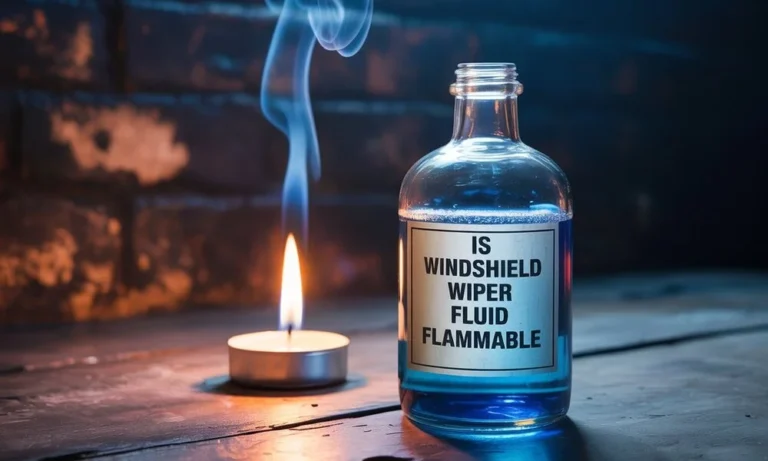
Windshield washer fluid can be flammable when its formulation has a sufficiently low flash point, particularly when it contains a significant amount of a flammable alcohol such as methanol. OSHA defines a flammable liquid based on its flash point, so the classification depends on the properties of the actual product rather than its name alone.
This is why there is no single answer that applies to every windshield washer fluid.
A product designed for freezing temperatures may contain more alcohol than another formulation because alcohol helps lower the freezing point. Some products may use different alcohols or other ingredients.
The safest approach is to check the bottle label or the manufacturer’s SDS for the exact product you are using.
Why Can Windshield Washer Fluid Be Flammable?
The main reason some washer fluids can burn is their alcohol content.
Methanol in Washer Fluid
Methanol, also known as methyl alcohol, is used in some windshield washer formulations because of its antifreeze properties. It is also a flammable liquid.
OSHA lists methanol’s flash point at 52°F and identifies it as a flammable substance.
A flash point is not the same thing as the temperature at which a liquid spontaneously catches fire. Instead, it describes the minimum temperature at which a liquid gives off enough vapor to form an ignitable mixture with air near its surface.
That distinction matters because the vapors can be the part that ignites.
Other Alcohols
Some automotive washer fluids may use other alcohols depending on their formulation. Alcohols such as ethanol and isopropanol are also flammable substances. OSHA notes that lower-boiling alcohols including methanol, ethanol, and isopropanol are volatile and flammable.
However, you should not assume that every washer fluid contains the same alcohol or the same concentration.
Is All Windshield Washer Fluid Flammable?
No. You should not assume that every windshield washer fluid has the same flammability classification.
The formulation matters. Two products can both be labeled windshield washer fluid but have different ingredients, concentrations, freezing protection, and safety classifications.
When checking a particular product, look at:
- Product label
- Safety Data Sheet
- Hazard warnings
- Ingredient information
- Flash point, when provided
- Manufacturer’s storage instructions
The SDS is particularly useful because it provides information about hazards, handling, storage, and emergency measures for a specific chemical product.
Why Winter Washer Fluid May Be Different
Cold-weather washer fluids are designed to resist freezing at lower temperatures. Their formulation may therefore differ from a basic warm-weather product.
That does not mean every winter washer fluid is automatically more flammable. It means you should check the specific product’s safety information rather than making assumptions based only on the season or temperature rating.
Can Windshield Washer Fluid Catch Fire?
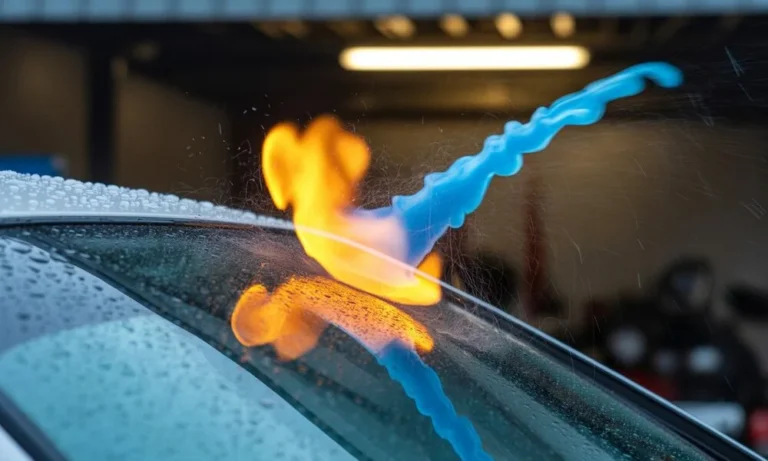
Yes, a washer fluid that is classified as flammable can catch fire if its vapors or liquid encounter an appropriate ignition source.
Potential ignition sources can include:
- Open flames
- Cigarettes
- Sparks
- Hot work
- Certain electrical ignition sources
- Very hot surfaces
OSHA’s guidance for flammable liquids emphasizes keeping applicable flammable liquids away from ignition sources and controlling spills and leaks.
This does not mean a normal washer fluid spill will automatically ignite. Fire requires the right combination of fuel, oxygen, and an ignition source.
Still, treating a product according to its label and SDS is the appropriate safety practice.
Is Windshield Washer Fluid Flammable Near a Hot Engine?
A spill near a hot engine deserves attention, particularly if the product is classified as flammable.
A hot engine compartment contains surfaces and components that can become very warm during vehicle operation. If washer fluid spills there, avoid introducing an ignition source and follow the product’s safety instructions for cleanup.
If the spill is significant or you are unsure how to handle it safely, consult the product SDS or seek appropriate professional guidance.
Do not deliberately test whether washer fluid will ignite. Its behavior depends on the formulation, temperature, concentration, and surrounding conditions.
What Happens If You Spill Windshield Washer Fluid?
A small spill should be handled according to the product’s label and SDS.
A practical approach is:
- Keep ignition sources away. Do not smoke or use an open flame near a potentially flammable product.
- Ventilate the area when appropriate. This is especially important if the product has a strong alcohol odor or the spill occurred in an enclosed space.
- Prevent unnecessary contact. Avoid getting the fluid in your eyes or on your skin.
- Clean the spill according to the product instructions.
- Dispose of contaminated materials appropriately. Follow local requirements and the manufacturer’s instructions.
OSHA requires precautions for certain flammable liquids, including keeping applicable liquids away from ignition sources and safely managing leaks and spills.
For a large spill, unknown product, or situation involving strong fumes or a potential fire hazard, follow the SDS emergency instructions rather than improvising.
Is Windshield Washer Fluid Safe to Store in a Garage?
It can be stored safely when the product is stored according to the manufacturer’s instructions, but potentially flammable washer fluid should be kept away from ignition sources and excessive heat.
A garage may contain several potential ignition sources, including:
- Space heaters
- Pilot lights
- Welding or grinding equipment
- Open flames
- Sparks
- Hot equipment
Keep the container properly closed when it is not being used. OSHA’s flammable-liquid requirements include keeping applicable flammable liquids in covered containers when not in use and controlling ignition sources.
The product label and SDS should take priority over generic storage advice because formulations vary.
Can You Leave Windshield Washer Fluid in Your Car?
A properly sealed bottle should be handled according to the manufacturer’s storage instructions, but prolonged exposure to excessive heat should be avoided.
A vehicle parked in direct sunlight can become significantly hotter than the surrounding outdoor temperature. If the product label provides a maximum storage temperature or specific storage conditions, follow those instructions.
Keep the container upright, closed, and secured so it cannot tip over and leak.
Avoid storing chemicals in the passenger compartment when there is a safer, manufacturer-approved alternative.
Is Windshield Washer Fluid Toxic?
Flammability and toxicity are separate safety issues.
A fluid can present a fire hazard, a health hazard, both, or neither depending on its formulation.
This is particularly important with methanol-containing products. Methanol is not only flammable, but exposure can also be hazardous. OSHA provides occupational exposure information and identifies methanol as a chemical requiring appropriate controls.
For this reason, do not taste washer fluid, intentionally inhale its vapors, or treat it like ordinary water simply because it is used in a vehicle.
If a product gets into your eyes, is swallowed, or causes concerning symptoms after exposure, consult the product’s emergency information and seek appropriate medical advice.
You can also read about: Will Windshield Wiper Fluid Hurt a Radiator?
What Should You Do When Refilling Washer Fluid?
Refilling windshield washer fluid is normally straightforward, but basic precautions are still useful.
Turn Off the Vehicle
Before opening the hood, park safely and turn the engine off.
Identify the Correct Reservoir
Use the washer-fluid reservoir identified in your vehicle owner’s manual. Do not confuse it with the coolant, brake fluid, power steering fluid, or other reservoirs.
Use the Correct Product
Choose a washer fluid appropriate for your vehicle and the temperatures you expect to encounter.
Do not mix products blindly, particularly if you are unsure about their compatibility or formulation.
Avoid Spills
Pour slowly and use a funnel if necessary. If you spill the product, clean it according to the manufacturer’s instructions.
Close the Container
After filling the reservoir, securely close the washer-fluid container and store it according to the product label.
What Should You Not Do With Windshield Washer Fluid?
A few common mistakes are worth avoiding.
Do Not Store It Near Open Flames
If the product is flammable, storing it beside a flame or other ignition source creates an unnecessary hazard.
Do Not Transfer It Into an Unlabeled Container
Keeping the original container and label helps you identify the product and access its safety information.
Do Not Assume All Washer Fluids Are Identical
Different formulations can have different ingredients and hazards.
Do Not Test Its Flammability
Never pour washer fluid onto a surface and try to ignite it. That creates an unnecessary fire and exposure risk.
Do Not Treat It Like Drinking Water
Washer fluid is an automotive chemical product, not something intended for human consumption.
How Can You Tell If Your Washer Fluid Is Flammable?
The most reliable way is to check the product’s label and Safety Data Sheet rather than guessing from its color or smell.
Look for:
- Flammable hazard symbols
- Fire-related warnings
- Methanol or alcohol ingredients
- Flash point information
- Storage instructions
- Handling precautions
- Manufacturer safety recommendations
OSHA defines flammable liquids using flash-point criteria, so the actual formulation and measured properties matter.
The color of washer fluid does not reliably tell you whether it is flammable.
Does Washer Fluid Evaporate?
Some components of washer fluid can evaporate, particularly volatile alcohols.
Methanol, for example, has measurable vapor pressure and a relatively low boiling point, which contributes to its volatility.
Evaporation does not mean that the liquid has disappeared without consequence. Depending on the product and environment, vapors can accumulate and create exposure or ignition concerns.
This is another reason to keep containers closed and follow the manufacturer’s storage and handling instructions.
When Should You Get Professional Help?
Most washer-fluid refills do not require an auto glass professional. However, professional help may be appropriate if your concern is connected to a damaged windshield or vehicle problem.
For example, seek an appropriate automotive professional if:
- Your windshield is cracked or badly damaged
- Washer fluid is leaking because of vehicle damage
- A spill has reached electrical components
- You notice unusual fumes or a strong chemical odor
- The windshield washer system is malfunctioning
- You are unsure which automotive fluid belongs in a reservoir
If the vehicle also needs glass service, Windshield Replacement In Austin TX is one service option to explore through Texas Reliable Auto Glass.

Key Takeaways
- Windshield washer fluid can be flammable, depending on its formulation.
- Some washer fluids contain methanol or other alcohols that can burn.
- Methanol has a low flash point and is classified as a flammable liquid.
- Not every washer-fluid product has the same ingredients or fire classification.
- Keep potentially flammable washer fluid away from flames, sparks, and other ignition sources.
- Store the product according to its label and Safety Data Sheet.
- Check the specific product’s SDS when you need reliable information about flammability, ingredients, or emergency handling.
- Never deliberately test whether washer fluid will catch fire.
Conclusion
So, is windshield washer fluid flammable? It can be. The answer depends on the specific formulation, with some products containing flammable alcohols such as methanol. Because washer fluids are not all made the same way, the product label and SDS are the best sources for determining the exact fire and handling precautions.
For everyday vehicle maintenance, keep washer fluid properly closed, store it according to the manufacturer’s instructions, and keep potentially flammable products away from flames, sparks, and excessive heat. If your concern also involves windshield damage or another auto glass problem, Texas Reliable Auto Glass can help you identify the appropriate glass service for your vehicle.
Frequently Asked Questions
Is windshield wiper fluid flammable?
Some windshield wiper fluids are flammable because they contain alcohols such as methanol. However, formulations vary, so the safest way to determine the fire classification is to check the specific product’s label or SDS.
Is windshield washer fluid flammable?
Yes, some windshield washer fluids are flammable. The exact risk depends on the formulation, concentration, and flash point of the product. Products containing flammable alcohols require appropriate handling and storage.
Is washer fluid flammable when it dries?
The liquid can evaporate, leaving behind some nonvolatile ingredients, but volatile components may produce vapors before they disappear. If the product is classified as flammable, keep it away from ignition sources while handling spills or open containers.
Can windshield washer fluid catch fire?
Yes, a washer fluid classified as flammable can ignite when its liquid or vapors encounter an appropriate ignition source. Do not deliberately test its flammability.
Does windshield washer fluid contain methanol?
Some formulations contain methanol, while others use different ingredients. Check the product label or SDS for the exact formulation instead of assuming every washer fluid contains methanol.
Is winter windshield washer fluid more flammable?
Not necessarily. Winter formulations are designed to provide greater freeze protection, but their fire properties depend on their specific ingredients and concentration. Check the manufacturer’s safety information for the product you are using.
Can I store windshield washer fluid in my garage?
You can store it according to the manufacturer’s instructions. If the product is classified as flammable, keep it in its original closed container and away from flames, sparks, and other ignition sources.
Is spilled windshield washer fluid dangerous?
A small spill is not automatically a fire emergency, but potentially flammable washer fluid should be kept away from ignition sources and cleaned according to the product’s instructions. Larger or uncertain spills require greater caution.
What is the safest way to handle windshield washer fluid?
Keep the container closed when not in use, avoid ignition sources, prevent unnecessary skin or eye contact, follow the product label, and consult the SDS when you need specific handling or emergency information.