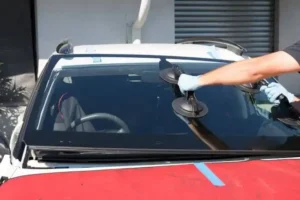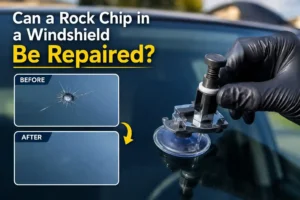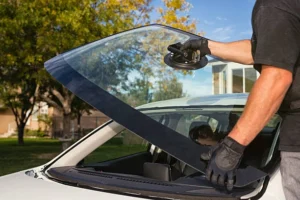

A damaged windshield can quickly become a business problem when the vehicle is used for deliveries, transportation, construction, service calls, or other daily operations. A cracked windshield can reduce visibility and may prevent a commercial vehicle from being safely returned to service.
Windshield replacement for commercial vehicles requires more planning than simply finding a piece of glass that fits. The replacement must match the vehicle, its windshield features, and any technology connected to the glass.
For business owners and fleet managers, the goal is usually straightforward: replace the damaged windshield correctly, minimize unnecessary downtime, and get the vehicle ready for work as soon as it is safe to operate.
Quick Answer
Windshield replacement for commercial vehicles involves removing damaged glass, preparing the mounting area, installing the correct replacement windshield, and allowing the adhesive to cure properly. Trucks, vans, buses, and fleet vehicles may require different glass specifications, installation procedures, or camera calibration depending on the vehicle.
Why Is Commercial Windshield Replacement Different?
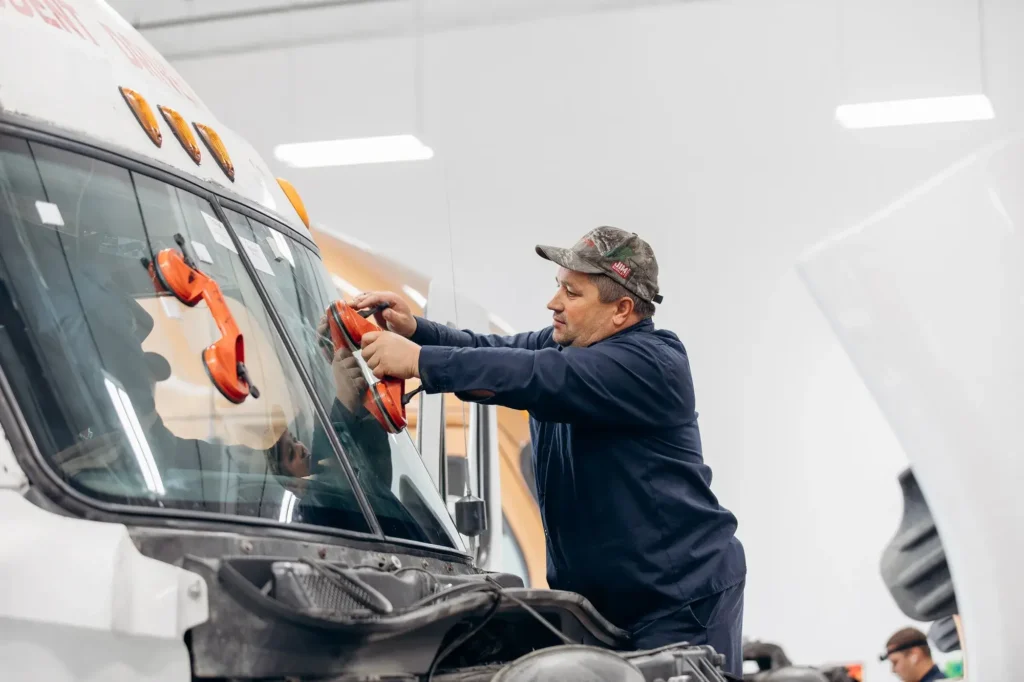
Commercial vehicles come in many sizes and configurations. A delivery van, semi-truck, shuttle bus, and work truck can have very different windshield designs and installation requirements.
Commercial windshield replacement may involve:
- Larger or specialized windshields
- Different glass shapes and specifications
- Windshield-mounted cameras or sensors
- Additional trim or molding
- Different adhesive requirements
- Fleet scheduling and downtime concerns
- Post-installation inspections or calibration
The correct replacement depends on the specific vehicle rather than simply its general category.
For example, two commercial vans from different model years may look similar but use different windshield designs. Providing the vehicle’s year, make, model, and VIN can help a glass professional identify the appropriate replacement.
Which Commercial Vehicles May Need Windshield Replacement?
Professional glass replacement may be needed for many types of commercial vehicles.
Delivery Vans
Delivery companies depend on vans for regular routes. A damaged windshield can affect driver visibility and interrupt scheduled deliveries.
Because these vehicles often accumulate significant mileage, windshield damage from road debris can become a recurring maintenance concern.
Work Trucks
Construction, utility, plumbing, electrical, landscaping, and other service businesses often depend on trucks throughout the workday.
A windshield with a spreading crack or significant impact damage may need to be addressed before the vehicle returns to regular service.
Semi-Trucks and Heavy Trucks
Large trucks can experience windshield damage from rocks and other road debris, particularly during highway driving.
Heavy-duty vehicles may also use specialized windshield designs, so the correct glass needs to be identified before installation.
Buses and Passenger Vehicles
Buses and other passenger-carrying commercial vehicles can have larger or specialized windshields.
Replacement planning should account for the vehicle’s size, glass specifications, operating schedule, and any technology associated with the windshield.
Fleet Vehicles
Fleet operators may manage dozens or hundreds of vehicles. A consistent windshield replacement process can make it easier to schedule repairs and keep maintenance records organized.
When Does a Commercial Vehicle Windshield Need Replacement?
Not every windshield chip requires complete replacement. Some small areas of damage may be suitable for repair.
Replacement may be appropriate when:
- A crack is long or continues to spread
- Damage reaches the edge of the windshield
- There are multiple damaged areas
- The impact has caused significant glass damage
- Damage affects the driver’s viewing area
- The windshield has structural damage
- A previous repair is not suitable for the condition of the glass
The location and severity of the damage matter. A professional inspection can help determine whether repair or replacement is appropriate.
What Factors Affect Commercial Windshield Replacement Cost?
There is no single price for every commercial windshield replacement. The final cost depends on the vehicle and the work required.
Vehicle Type and Windshield Size
A large truck or bus windshield can require different materials, handling, and installation procedures than a standard passenger vehicle windshield.
Glass Specifications
Replacement glass must match the vehicle’s design and equipment.
Depending on the vehicle, the windshield may include or accommodate:
- Rain sensors
- Cameras
- Antennas
- Heating elements
- Special tinting
- Acoustic features
- Other vehicle-specific components
Using the correct specification is more important than choosing glass based only on appearance.
Labor
Commercial vehicles can require additional time or specialized handling during installation.
Labor costs may depend on the vehicle design, accessibility of the windshield, removal requirements, and installation complexity.
Calibration
Some newer commercial vehicles use cameras or advanced driver-assistance systems mounted near the windshield.
If replacing the glass changes the position or field of view of a camera, calibration may be required. The requirement depends on the vehicle and its installed systems.
Fleet Scheduling
For a business, the cost of windshield replacement is not limited to the glass and labor. Vehicle downtime can also affect operations.
Fleet managers should consider both the replacement service and how the vehicle can be scheduled around its normal route.
How Does Commercial Windshield Replacement Work?
A professional replacement generally follows a series of steps.
1. Vehicle Identification
The technician identifies the vehicle and determines which windshield specification is required.
The vehicle’s year, make, model, trim, and VIN can help confirm the correct glass.
2. Damage Inspection
The existing windshield is inspected to determine whether repair or replacement is appropriate.
If replacement is necessary, the technician checks the surrounding area and any components attached to or positioned around the windshield.
3. Removal of the Damaged Glass
The damaged windshield is carefully removed using appropriate glass removal tools.
Care is needed to avoid damaging surrounding bodywork, trim, wiring, sensors, or other components.
4. Surface Preparation
The mounting area is cleaned and prepared for the replacement glass.
Proper preparation is important because the windshield must bond securely to the vehicle.
5. New Windshield Installation
The replacement windshield is positioned and installed using the appropriate automotive glass adhesive and installation procedure.
Correct alignment matters for both the appearance and function of the windshield.
6. System Inspection and Calibration
If the vehicle has a camera or other windshield-related technology, the system should be checked after replacement.
Calibration requirements vary by vehicle.
7. Final Inspection
Before the vehicle returns to service, the installation should be checked for issues such as:
- Proper alignment
- Adhesive bonding
- Water leaks
- Wind noise
- Trim placement
- Glass visibility
- Camera or sensor-related concerns
The technician should also provide the appropriate safe-drive-away guidance based on the adhesive and installation conditions.
You can read about : Audi A4 Windshield Replacement
How Can Fleet Managers Reduce Commercial Vehicle Downtime?
Windshield damage cannot always be predicted, but businesses can make the replacement process easier to manage.
Keep Vehicle Information Available
Maintain records containing each vehicle’s:
- Year
- Make
- Model
- Trim
- VIN
- Fleet identification number
Having this information available can make it easier to identify the correct windshield.
Schedule Around Vehicle Routes
For vehicles with predictable routes, schedule windshield service during planned maintenance windows whenever possible.
This can reduce disruption to deliveries, service appointments, and transportation schedules.
Keep Damage From Getting Worse
A small chip can sometimes become a larger crack after temperature changes, vibration, or additional road impact.
If a windshield is damaged, have it assessed rather than continuing to operate the vehicle without considering the condition of the glass.
Ask About Calibration Before Installation
If a commercial vehicle has a camera or driver-assistance technology near the windshield, ask whether calibration is required.
Knowing this before the job helps fleet managers understand the complete service requirements.
What Should You Ask Before Commercial Windshield Replacement?
Before approving a replacement, ask the glass provider:
- Is the replacement windshield correct for this exact vehicle?
- Can you verify the glass using the VIN?
- Does this vehicle have a camera or sensor near the windshield?
- Will calibration be required after installation?
- Is calibration included if it is needed?
- What is included in the quoted price?
- How long will the vehicle need to remain out of service?
- When will the vehicle be safe to drive after installation?
These questions help avoid unexpected steps or costs later.
Common Commercial Windshield Replacement Mistakes
Choosing the Cheapest Glass Without Checking Specifications
A lower price does not tell you whether the glass has the correct specifications for the vehicle.
The replacement should be selected based on compatibility and required features.
Forgetting About Driver-Assistance Systems
A windshield replacement can involve more than the glass itself when cameras or sensors are mounted near it.
Ignoring these systems can create additional problems after installation.
Not Planning for Downtime
A commercial vehicle that is unavailable can affect routes and schedules.
Fleet managers should ask about installation time and safe-drive-away requirements before scheduling the job.
Assuming Every Windshield Is Interchangeable
Even vehicles from the same manufacturer can have different windshield specifications across model years and trims.
Confirm compatibility before ordering replacement glass.
When Should a Business Use Professional Commercial Glass Service?
Professional service is appropriate when a commercial vehicle has significant windshield damage, specialized glass, windshield-mounted technology, or a replacement that requires careful installation.
Commercial vehicle windshields can be large, heavy, and difficult to handle safely. Improper installation can also create problems such as leaks, wind noise, poor fit, or bonding issues.
For businesses operating multiple vehicles, professional service can also make scheduling and maintenance easier to manage.
If your business operates in the Austin area and also needs passenger vehicle glass work, you can review Windshield Replacement In Austin TX for additional windshield replacement information.

Key Takeaways
- Commercial windshield replacement depends on the vehicle’s exact make, model, year, and glass specifications.
- Trucks, vans, buses, and fleet vehicles may have different windshield requirements.
- Cameras and other technology near the windshield may require inspection or calibration after replacement.
- Fleet managers should plan replacement around vehicle routes to reduce operational disruption.
- Always ask what glass, labor, calibration, and safe-drive-away requirements are included in the service.
- Significant windshield damage should be assessed professionally before the vehicle returns to regular operation.
Conclusion
Windshield replacement for commercial vehicles should be treated as an important maintenance task rather than simply a glass replacement. The correct windshield needs to match the vehicle, and any cameras or other technology connected to the windshield should be properly considered during the installation.
For fleet managers and business owners, planning the service around vehicle schedules can help reduce unnecessary downtime. Before approving the work, confirm the glass specifications, installation requirements, calibration needs, and safe-drive-away time.
Texas Reliable Auto Glass can help commercial vehicle operators evaluate their windshield replacement needs and determine the appropriate service for their vehicles. Providing accurate vehicle information in advance can help make the replacement process more straightforward.
Frequently Asked Questions
How much does commercial windshield replacement cost?
The cost varies based on the vehicle, windshield size and specifications, labor, and any additional work such as sensor or camera calibration. A vehicle-specific quote is needed for an accurate price.
Can a commercial truck windshield be repaired instead of replaced?
Sometimes. Small chips or certain limited damage may be repairable, but larger cracks, edge damage, or damage in important viewing areas may require replacement.
How long does commercial windshield replacement take?
The time varies by vehicle and installation requirements. Large or specialized windshields may require additional handling, and adhesive curing time must also be considered before the vehicle returns to service.
Do commercial vehicles need windshield calibration after replacement?
Some do, but not all. Calibration may be necessary when a vehicle has a camera or driver-assistance system affected by windshield replacement. The requirement depends on the vehicle’s equipment.
Can a fleet schedule multiple windshield replacements?
Yes. Fleet operators can coordinate windshield replacement around vehicle routes, planned maintenance, and operating schedules. Having vehicle information ready can also make scheduling easier.
Is commercial windshield glass different from regular car glass?
It can be. Commercial vehicles may use larger or vehicle-specific windshields with different shapes, specifications, and technology requirements.
Can a cracked commercial windshield be driven with?
That depends on the location and severity of the damage and applicable safety requirements. A spreading or significant crack can affect visibility and should be assessed before the vehicle continues normal operation.
What information should I provide when requesting a commercial windshield replacement?
Provide the vehicle’s year, make, model, trim, VIN when available, fleet number if applicable, and details about the windshield damage. Photos may also help the service provider understand the situation.