
You bought a car without a sunroof and now you’re wondering if you made a mistake. Maybe you test-drove a friend’s car with one and loved it. Maybe you just want more light and fresh air on your commute. Either way, the question is fair and the answer might surprise you.
Yes, can you add a sunroof to a car and in most cases, the answer is yes. It’s called an aftermarket sunroof installation. It’s a real service offered by auto glass shops and specialty installers across the country. It works. But there are important things to know before you book an appointment.
Quick Answer: Can You Add a Sunroof to Any Car?
Most cars can have an aftermarket sunroof installed. Not every single vehicle qualifies, but the majority of standard sedans, SUVs, and hatchbacks do.
The key factors are roof structure, headroom, and the type of sunroof you want. A flat metal roof with enough interior clearance is typically all you need. A shop will inspect your vehicle before committing to the job.
So if you’ve been asking yourself, can I add a sunroof to my car the answer for most people is yes, with the right installer and the right sunroof type.
What Does It Mean to Add a Sunroof to a Car?
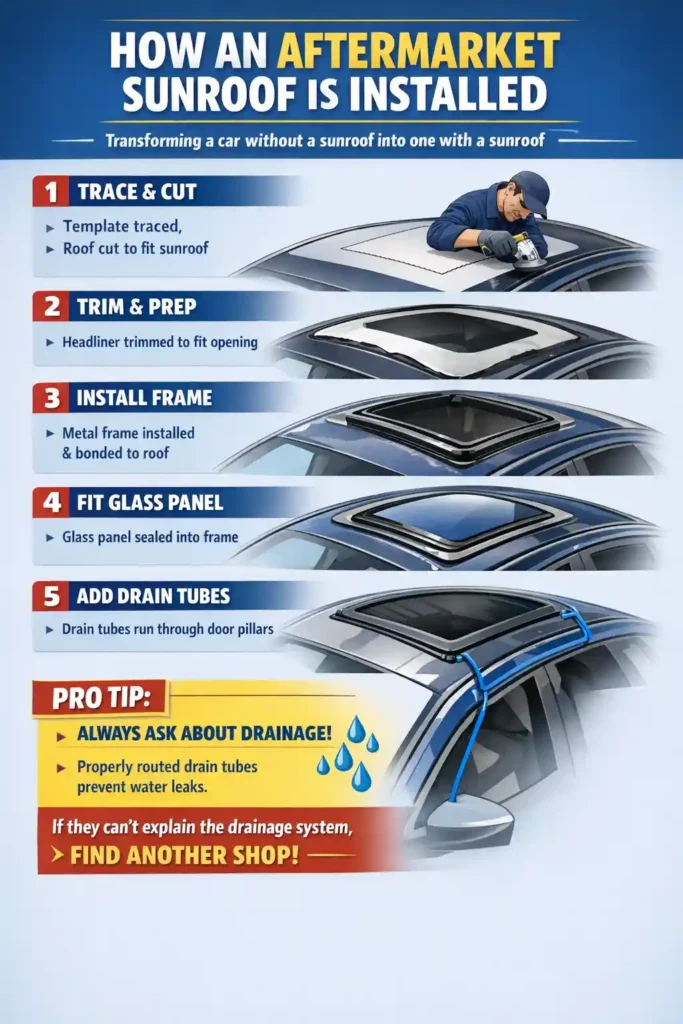
Adding a sunroof means cutting an opening into your car’s roof and fitting a glass or panel unit into that space. The installer reinforces the surrounding metal, installs a frame, fits the glass, and seals everything to prevent leaks.
It’s not a simple job. It requires precision cutting, structural reinforcement, and weatherproofing. When done correctly by a qualified shop, the result looks factory-fitted and functions reliably.
When done poorly, it leaks, rattles, and causes rust damage. That’s why the installer you choose matters as much as the sunroof itself.
How Does an Aftermarket Sunroof Work?
An aftermarket sunroof functions the same way a factory sunroof does. Glass sits in a frame mounted on the roof. It either tilts open, slides back on a track, or pops up depending on the type.
Most aftermarket units come with:
- A tempered or laminated glass panel
- A metal or aluminum frame
- A rubber seal around the perimeter
- A drain system to channel water away from the cabin
- A manual crank or electric motor for operation
The drain system is the most critical part. It routes rainwater down through tubes that exit near the door sills or under the car. If those drains get blocked, water leaks inside.
Types of Sunroofs You Can Add to a Car
Not all sunroofs work the same way. Here are the main types available for aftermarket installation:
Pop-Up Sunroof
The most affordable option. The glass panel tilts upward at the rear to let air in. It doesn’t slide open. Simple, lightweight, and easy to install. Great for budget-conscious buyers.
Inbuilt Sliding Sunroof
The panel slides back under the roof, not over it. This preserves headroom better than a spoiler type. More complex to install but the most popular choice for a factory-like feel.
Spoiler Sunroof
The glass tilts and slides back, sitting on top of the roof when open. Easier to install than an inbuilt style. Slightly reduces headroom when open. Common in older installations.
Folding Sunroof (Cabrio Style)
A soft fabric panel that folds back like a convertible. Less common in modern installs. Works well on older or smaller vehicles. Provides a fully open-air experience.
Panoramic Sunroof
Covers a large portion of the roof with glass. Can span front and rear seating. The most complex and expensive aftermarket option. Not all vehicles can support it structurally.
Sunroof vs Moonroof: What’s the Difference?
People use these terms interchangeably, but they’re not the same thing.
A sunroof is typically an opaque panel metal or glass that opens to let in air and light. Older sunroofs were often solid panels you could remove completely.
A moonroof is a tinted glass panel that lets light through even when closed. It usually tilts or slides. Most modern “sunroofs” are technically moonroofs.
For aftermarket installation, the distinction matters less. Most installers offer tinted glass panels that function as moonroofs. When people ask can a sunroof be installed in a car, they’re usually referring to this glass panel style.
Can Every Car Have a Sunroof Installed?
Most cars can. But not all. Here’s what can prevent a sunroof installation:
Structural roof design. Some vehicles have internal roof bracing that leaves no clear space for a sunroof cutout. Convertibles and some sports cars fall into this category.
Headroom clearance. If your interior headroom is already tight, a sunroof frame eats into that space. Most installers require at least 3 to 4 inches of clearance.
Roof curvature. Highly curved roofs make it harder to fit a flat glass panel with a proper seal. Not impossible, but it limits your options.
Existing sunroof infrastructure. Some base model cars are wired and braced for a factory sunroof that was never fitted. Those are ideal candidates for aftermarket installation.
Vehicle age and condition. Rusty or structurally compromised roofs are not good candidates. Cutting into weakened metal creates safety and leak risks.
A good installer will inspect your car first and tell you honestly what’s possible.
Factors to Consider Before Adding a Sunroof to a Car
Before you commit, think through these points:
Your climate. If you live somewhere with heavy rain or snow, a well-sealed sunroof is critical. Drainage systems need to be maintained regularly in wet climates.
How you use your car. If you park outside constantly, UV exposure through the glass can fade your interior faster. A UV-rated tinted panel helps.
Your roof liner. The headliner inside your car will be cut and modified. In some vehicles, this is straightforward. In others, it’s complex and adds cost.
Warranty implications. If your car is under a factory warranty, cutting the roof can void portions of it. Check with your dealer before proceeding.
Installer experience. This is non-negotiable. Aftermarket sunroof installation requires precision. Ask how many installs the shop has done and look at reviews.
How Much Does It Cost to Add a Sunroof to a Car?
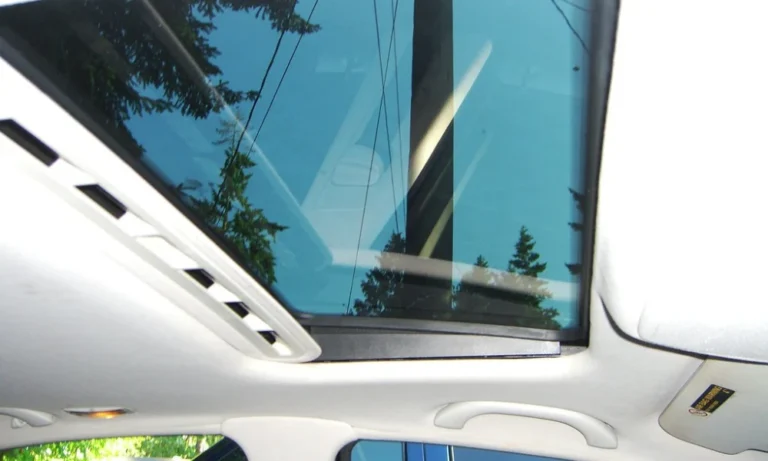
The cost to add a sunroof to a car varies based on the type of unit and the complexity of installation. Here’s a realistic breakdown:
- Pop-up sunroof: $300 – $700 installed
- Spoiler sunroof: $400 – $900 installed
- Inbuilt sliding sunroof: $700 – $1,500 installed
- Panoramic sunroof: $1,500 – $4,000+ installed
- Electric vs manual: electric adds $150 – $400 to any type
Labor alone typically runs $200 to $600 depending on your location and the complexity of the job. Premium shops in major cities charge more. The sunroof unit itself accounts for the rest of the cost.
If you’re asking can you have a sunroof installed on a budget, a pop-up or spoiler unit is the most accessible entry point. They work well and cost significantly less than a sliding inbuilt unit.
Pros and Cons of Adding a Sunroof
Pros
- Natural light makes the interior feel larger and more open
- Fresh air without rolling down windows — quieter at speed
- Adds visual appeal to the vehicle
- Can increase resale interest in some markets
- Makes long drives more enjoyable
Cons
- Adds weight to the roof, slightly raising the center of gravity
- Requires regular maintenance to prevent leaks
- Reduces headroom slightly
- Can increase cabin heat in summer without UV glass
- Poor installation causes serious water damage over time
- May void portions of factory warranty
Factory Sunroof vs Aftermarket Sunroof
Factory sunroofs are engineered specifically for the vehicle. The roof is reinforced at the factory. Drainage is built into the car’s structure. The result is tight, precise, and covered under the car’s warranty.
Aftermarket sunroofs are retrofitted. A quality installation by a skilled shop produces a result that looks and works similarly. But it will never be identical to a factory installation.
The main differences in practice:
Sealing quality. Factory seals are precise to the millimeter. Aftermarket seals depend on the installer’s skill and the quality of the gasket material used.
Drainage. Factory drains are routed through purpose-built channels in the body. Aftermarket drains are added separately and must be properly secured.
Appearance. A good aftermarket install is indistinguishable to most eyes. A poor one shows gaps, uneven trim, or visible modifications to the headliner.
Cost. Factory sunroofs are built into the vehicle’s original price. Adding one through a dealer as a retrofit often costs more than going to an independent auto glass specialist.
You can also read about: moonroof vs sunroof.
How Long Does Sunroof Installation Take?
Most aftermarket sunroof installations take between 3 and 6 hours. A pop-up unit on a straightforward vehicle can be done in 2 to 3 hours. A panoramic install on a complex roof structure may take a full day.
Factors that affect installation time:
- Type of sunroof being installed
- Vehicle roof structure and headliner complexity
- Whether the shop has done that specific vehicle model before
- Electric vs manual operation (wiring adds time)
Plan to leave your car for a full day to be safe. Rushing an installation increases the risk of errors and sunroof errors are expensive to fix.
Common Problems After Installing a Sunroof
Even a good installation can develop issues over time. Here’s what to watch for:
Water leaks. The most common problem. Usually caused by clogged drain tubes or a seal that has dried out and cracked. Flush drains annually and inspect seals every 6 months.
Wind noise. A slight misalignment or worn seal causes a whistling sound at highway speeds. Usually fixed by adjusting the panel or replacing the seal.
Motor failure. Electric sunroofs use a small motor that can fail over time. Signs include slow movement, grinding sounds, or the panel stopping mid-travel.
Rattling. Loose trim pieces or a panel that has shifted slightly on its tracks. Often a simple adjustment fixes it.
Headliner sagging. If the headliner wasn’t properly secured during installation, it can begin to sag around the sunroof frame over time.
Catching these problems early keeps repair costs low. Ignoring them, especially leaks, leads to serious interior damage.
How to Maintain an Aftermarket Sunroof
Maintenance is not optional. It’s what separates a sunroof that lasts 15 years from one that fails in 3.
Clean the channel and frame every time you wash your car. Dirt and debris accumulate in the channel and block the drain tubes.
Flush the drain tubes once or twice a year. Pour a small amount of water into the channel and watch it drain out near the door sills or rocker panels. If it doesn’t drain, the tubes are blocked.
Lubricate the rubber seal with a silicone-based lubricant every 6 months. This keeps the seal flexible and prevents cracking.
Lubricate the tracks if you have a sliding unit. Use a silicone spray or lithium grease on the tracks every 6 months for smooth operation.
Test the drainage after heavy rain. Look for water on the floor mats or near the interior light housing early signs of a drain issue.
Does Adding a Sunroof Increase Car Value?
It depends on the market and the buyer.
In regions with good weather, a sunroof is a desirable feature. It can make your car more attractive to buyers and potentially support a slightly higher asking price.
In colder or rainier climates, some buyers see an aftermarket sunroof as a potential liability worrying about leaks or maintenance. Buyers who know cars know the difference between factory and aftermarket installations.
A clean, professional aftermarket install that has been well maintained will not hurt your resale value. A sloppy install with visible gaps or a history of leaks will.
The honest answer: a sunroof may increase buyer interest, but it’s unlikely to dramatically raise the dollar value of your car unless it’s a factory unit on a vehicle where that feature commands a premium.
Best Vehicles for Aftermarket Sunroof Installation
Some vehicles are simply better candidates than others. The best ones have:
- Flat or gently curved roof sections
- Adequate headroom
- Simple headliner construction
- Strong roof rails for structural support
Vehicles that tend to work well include mid-size sedans like the Toyota Camry and Honda Accord, popular SUVs like the RAV4 and CR-V, and hatchbacks with adequate roof real estate. Trucks with cab configurations that have flat roofs also work well.
Vehicles that are more challenging include sports cars with curved rooflines, compact cars with minimal headroom, and luxury vehicles with complex embedded technology in the roof structure.
Ask your installer about your specific model. A shop with experience on your vehicle type will give you the most accurate answer.
Final Thoughts
Can you add a sunroof to a car? In most cases, absolutely yes. With the right installer, the right sunroof type, and proper ongoing maintenance, an aftermarket sunroof can give you years of reliable use and genuine enjoyment.
The risks are real leaks, rattles, and structural issues but they’re all manageable when the installation is done correctly and the sunroof is maintained properly. The biggest mistake people make is choosing an installer based on price alone. Skill and experience matter far more than saving $100 on the job.
If you already have a sunroof and it’s giving you trouble, or if you’re in the Austin area and want expert advice before committing to an installation, Texas Reliable Auto Glass is ready to help. Their team handles everything from Sunroof Repair in Austin to full aftermarket installations with the kind of workmanship that actually holds up long term.

Frequently Asked Questions
Can I add a sunroof to my car without voiding the warranty?
It depends on your warranty terms and what specifically gets affected. Cutting the roof can void coverage related to the roof, headliner, and water damage. Check with your dealer before proceeding. Some aftermarket installations have no impact on powertrain or mechanical warranties.
Is an aftermarket sunroof as good as a factory one?
A quality aftermarket installation comes close but isn’t identical to a factory unit. Factory sunroofs are engineered specifically for that vehicle. A skilled aftermarket installer can produce a result that looks the same and functions reliably but it requires a better installer and more ongoing maintenance.
How long does an aftermarket sunroof last?
With proper maintenance, a well-installed aftermarket sunroof can last 10 to 15 years or more. The seals and drain system are the parts most likely to need attention over time. Regular cleaning and lubrication extend the life significantly.
Can I add a panoramic sunroof to any car?
No. Panoramic sunroofs require significant roof space and structural support. Many smaller vehicles and those with complex roof structures cannot accommodate a panoramic installation. A standard single-panel sunroof is possible on far more vehicles than a panoramic unit.
What’s the cheapest way to add a sunroof to a car?
A manual pop-up sunroof is the most affordable option, typically costing $300 to $700 fully installed. It doesn’t slide open, but it tilts to let in air and costs far less than a sliding or panoramic unit. For buyers on a tight budget, it’s a practical starting point.