
A damp car interior is among the most frustrating issues a driver can encounter. It begins with a little bit of damp carpet, a musty smell or water stains on your headliner. Most people accuse the weather seal, but really it’s a clogged drain.
Rather than replacing weather seals or assuming your sunroof is faulty, draining the tubes is usually all that’s required. This activity tells you how to safely unclog sunroof drain tubes, maintain both front and rear drains, and whether vinegar should be used to clean the sunroof drain system.
Understanding How Sunroof Drains Work

Your sunroof does not shut air tightly. Water is supposed to infiltrate.
When rain lands on your sunroof, it enters a small moat surrounding the glass panel. From there, your glass or door seal components have drain holes that funnel water down your car’s body and out at the bottom, usually near the front wheels and rear bumper.
This system works great when the tubes are clear. But when they get blocked, water has nowhere to go. It backs up and leaks into your car, soaking your headliner, carpet, and even your electrical system.
There are usually four sunroof drains: two in the front corners and two in the rear. Each tube passes through the door pillars (the A and C pillars). Knowing where they sit helps you clean them faster.
What Causes a Sunroof Drain Clogged Problem?
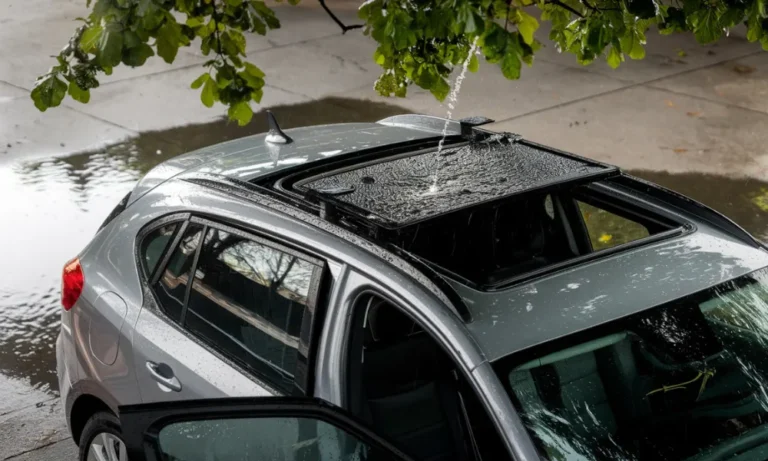
A sunroof drain clog problem generally occurs slowly and not all of a sudden. Common causes include:
1:Leaves and Tree Debris
If you park under trees regularly, leaves, seeds, small twigs, etc. will fall just like rain or snow in the sunroof track. They decompose, and the drain holes get blocked.
2:Dirt and Dust
A constant stream of road dust, pollen and mud is washed into the guttering with every rain. Such impurities gradually accumulate in the tubes of the drains.
3:Mould and Algae
Humid conditions help promote mould and algae formation in drain tubes, which deposit sticky blockages and trap even more particles and debris.
4:Broken Drain Tubes
The clog is not always trash. A drain tube that is twisted, pinched or disconnected will also disrupt water flow.
5:Bugs and Mini Nests
Sometimes insects such as bees create nests (honeycombs) in drain exits, which obstruct water from exiting the system.
Signs Your Sunroof Drain Needs Cleaning
Easy-to-detect symptoms, so that you can avoid expensive interior damage.
Some of the typical warning signs are:
- Wet carpets after rain.
- Drip from interior lights or overhead console – so not really from the sunroof!
- Water stains on your headliner.
- Mould or musky odour inside the car.
- Standing water by the sunroof frame.
- Water is also seeping in around the door pillars et al.
Drop a small cup of water in each corner of the sunroof channel as a simple test. If the water does not drain away in a matter of seconds, you should learn how to clean sunroof drain tubes.
Tools You'll Need
Needless to say, no specialised equipment is necessary.
Collect the following:
- Flexible Plastic Drain Snake
- Nylon weed trimmer line
- Compressed air
- Wet/dry vacuum
- Spray bottle
- Warm water
- Dish soap Mild
- Flashlight
- Soft microfiber cloth
- Rubber gloves
Don’t use metal wire because it can puncture or detach the drain tubes.
How To Clean Sunroof Drains Step by Step
Draining the pools takes less than an hour, and you don’t need much mechanical know-how.
Step 1: Locate the Drain Slits
Slide the sunroof all the way back.
At each corner of the surrounding channel, there is a small drain hole.
The drain tubes are fitted directly onto these four holes.
Use a flashlight and look into each corner to check for dirt or water.
If there is water in the tray, remove it with a wet/dry vacuum first.
Step 2: Clean Out Debris
Clean out the channel of the drain tubes first by removing any leaves and dirt before you put anything in the tubes.
A microfiber cloth or a tiny brush is good.
Maintaining the tray clean can help avoid blockages down the line.
Step 3: Blow Out the Drain Tubes
Use short bursts of compressed air.
Place the tip close to each drain hole and spray only for 1 or 2 seconds.
Excess air pressure may also disconnect the drain hose inside the car.
After each burst, add a little water to the drain hole.
If water runs out immediately, you likely dislodged the clog.
Step 4: Flush With Warm Water
When you think the blockage is cleared, flush out the tube with warm water.
Drizzle it slowly into each drain hole using a spray bottle or small funnel. Watch for water to come out from under the car behind the front wheels (front drains) or close to the rear bumper (rear drains).
A clear tube should drain rapidly and cleanly. If it’s draining too slowly, perform Step 3 again.
How to clean out sunroof drain tubes Part 4 also finishes the total process. Once the water is running cleanly, rinse with a mild soap solution to dissipate any residual residue in the tube.
Step 5: Clean the Trough and Retest
Now clean the sunroof trough itself after all four drains are clear.
Using a soft cloth and warm soapy water, wipe the channel. Focus on corners where debris has accumulated. Any dirt left in the channel will block the tubes again in no time.
Rinse with fresh water and ensure all four drains are draining freely. Close the sunroof for the final test, water on the closed glass, and look inside for drips/moisture.
You can read about: How To Replace a Sunroof Motor
How To Clean Rear Sunroof Drain Tubes
- Many people just clean the front drains, but the rear drains clog just as frequently, if not more.
- If you’re curious about how to clean rear sunroof drain tubes, it’s virtually the same.
- Just locate the rear drain holes at the rear corners of the sunroof channel.
- Use compressed air first.
- Then, take a flexible nylon line and thread it down each rear drain. ”
- Run warm water down the tubes until it flows freely out from under the rear end of your vehicle.
- Since road grime often clogs them from the bottom, always inspect both your rear drain exits.
To clean the front drain and the system as a whole, it’s best to start at the top to let it flow out easily. Clean both front and rear drains – this makes sure the full drainage system is cleared and running properly.
How Often Should You Clean Sunroof Drains?
Regular 2 cleanings are recommended by most mechanics, one in the spring after pollen season and one in the fall after the leaves have come down. If you park under trees or in a humid area, clean every three months. It’s less than 20 minutes once you know how.”
Frequent cleaning also prevents the tubes from breaking down. Tubes that become packed with wet debris for months can crack and fail, which turns a 20-minute job into a costly repair.
Common Mistakes to Avoid
Although you can clean a drain by yourself and in a matter of seconds, there are a few mistakes that will only make matters worse.
1:Using Metal Wire
Metal objects can puncture or rip the drainage tubes.
Use flexible plastic or nylon only.
2:Too much Air Pressure
The high-pressure air can blow the drain tubes off their fittings inside the vehicle.
Short bursts are all that are needed.
3:Neglecting Rear Drains
Many leaks result from clogged rear drain tubes.
Make sure to check all four drains – always.
4:Forgetting the Drain Exits
Sometimes the clog is under the car at the point where the tubes drain.
Examine these exits before presuming the tubes are plugged.
5:Skipping the Final Water Test
Be sure to pour water in all corners once you have cleaned.
A good fix is a fast flow of water under, but not into, the house.
Conclusion
How to clean sunroof drains is one of the simplest tips to prevent water leaks and interior damage to your vehicle. To the issue of the sunroof drain being blocked by leaves/dirt/mould, in most cases it’s possible to remove the blockage with a flexi drain snake, compressed air and warm water.
If you are wondering how to clean rear sunroof drain tubes, please note to clean all 4 drains, not just the 2 in the front. You should use a mild cleaning agent such as vinegar to clean the drain tubes of the sunroof if you want to prevent further mold growth and deposition after the tube has been cleaned of the obstruction. Most of all, knowing how to clean your sunroof drains before you get leaks can save you 100’s of dollars on repairs.
If your sunroof is still leaking after cleaning your drains, the problem could be cracked drainage tubes, deteriorated seals or a cracked sunroof assembly. If so, I think it would be better to have the system checked by professionals for free on this, rather than to risk causing more water damage.”
If the problem is beyond a simple fix, Texas Reliable Auto Glass provides expert Sunroof Repair in Austin.From clogged drains and cracked sunroof glass to complete sunroof replacements, our experienced technicians deliver reliable repairs that restore your vehicle’s safety and performance.

FAQs
How do I know if my sunroof drains are clogged?
Common signs include water leaking into the cabin, wet carpets, a damp headliner, musty odors, or standing water around the sunroof track after rain.
Can I clean sunroof drains myself?
Yes. Most clogged sunroof drains can be cleaned at home using a flexible nylon line, compressed air, warm water, and mild soap. Avoid using metal wire, as it can damage the drain tubes.
How often should I clean my sunroof drains?
It’s recommended to clean your sunroof drains at least twice a year, once in spring and once in fall. If you regularly park under trees or in dusty areas, inspect and clean them every three months.
Is it safe to use compressed air to unclog sunroof drains?
Yes, but only in short, low-pressure bursts. Excessive air pressure can disconnect the drain tubes inside the vehicle, leading to more costly repairs.
What should I do if my sunroof still leaks after cleaning the drains?
If leaks continue after the drains are clear, the problem may be caused by damaged drain tubes, worn weather seals, or a faulty sunroof assembly. In that case, a professional inspection is recommended.