
When a sunroof gets stuck open, a failed switch or electrical problem can leave your vehicle exposed to rain, debris, and other weather conditions. How To Close A Sunroof Manually depends on the vehicle, but many power sunroofs have an emergency closing method that allows the glass to be moved without using the normal switch.
The manual mechanism is commonly accessed around the sunroof motor or overhead console, although its exact location and design vary by vehicle. Before forcing anything, check your owner’s manual for the emergency closing procedure. If the mechanism is jammed or the glass is sitting unevenly, forcing it closed can cause additional damage.
Why You May Need to Close a Sunroof Manually
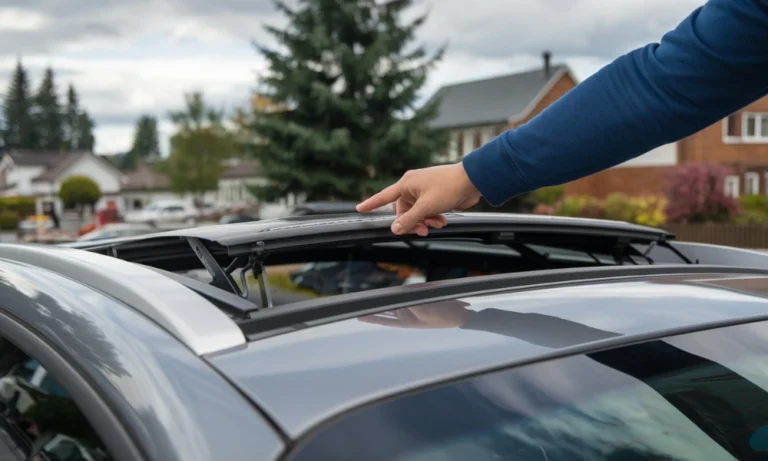
A sunroof can stop responding for several different reasons. An electrical problem may prevent the motor from receiving power, while a mechanical issue can stop the glass from moving even when the motor operates.
You may need to manually close the sunroof if:
- The sunroof switch does not respond.
- The sunroof motor has lost power.
- The vehicle battery is weak or disconnected.
- A fuse or electrical component has failed.
- The sunroof stops partway through its movement.
- The glass is stuck in the open position.
- The motor or drive mechanism has developed a mechanical fault.
Knowing the cause is useful, but if your immediate concern is keeping the interior protected, manually closing the roof may be necessary before the underlying problem is repaired.
What to Check Before Manually Closing the Sunroof
Before attempting to manually close a sunroof, take a few minutes to identify the type of problem.
Check the Sunroof Switch
Try the normal switch once or twice. If there is no response at all, the problem could be electrical.
If the motor makes noise but the glass does not move, the issue may involve the drive mechanism, tracks, cables, or another mechanical component.
Do not repeatedly operate the switch if the roof appears jammed. Continuous attempts can put additional strain on the mechanism.
Check for Obstructions
Look around the visible edges of the sunroof for leaves, dirt, or other objects that could interfere with movement.
Do not reach into moving components or attempt to pull the glass forcefully. An obstruction that is difficult to remove may require professional attention.
Find the Vehicle-Specific Manual Procedure
There is no single manual closing method that applies to every sunroof.
Depending on the vehicle, the emergency drive may be located behind an overhead console, near the sunroof motor, or beneath an interior trim panel. Some systems use a special tool or hex-style drive, while others have a different emergency mechanism.
Your owner’s manual is the best starting point because it can identify the correct access point and procedure for your specific model.
How to Manually Close a Sunroof Step by Step
The following is a general procedure for vehicles equipped with a manual emergency drive. Your vehicle’s manufacturer’s instructions should take priority.
1. Park the Vehicle Safely
Park on a level surface and switch the ignition off unless your vehicle’s manual procedure specifically requires another setting.
Make sure you have enough interior lighting to see the sunroof motor or access area clearly.
2. Locate the Emergency Drive
Look for the manual closing mechanism according to your owner’s manual.
It may require removing a small interior cover or accessing the area around the sunroof motor. Use a trim tool when appropriate rather than prying aggressively with a screwdriver.
If you cannot identify the emergency drive, stop and verify the procedure before removing additional trim.
3. Use the Correct Tool
Some sunroof systems have a manual drive that accepts a specific type of tool.
Use only the tool and size specified for your vehicle. A tool that does not fit correctly can damage the drive mechanism or make the repair more difficult.
Avoid using excessive force. The purpose of the emergency mechanism is to allow controlled movement, not to overcome a severely jammed roof through brute force.
4. Turn the Manual Drive Slowly
Once the correct mechanism and tool have been identified, turn it slowly in the direction specified by the vehicle manufacturer.
Watch the glass as it moves.
If the roof begins closing smoothly, continue until it reaches the proper closed position. If the mechanism suddenly becomes extremely difficult to turn, stop instead of forcing it.
A sudden increase in resistance can indicate a mechanical problem rather than a simple electrical failure.
5. Make Sure the Glass Is Fully Seated
After the sunroof reaches the closed position, check the edges of the glass.
The panel should sit evenly within its normal closed position. If one side remains higher than the other or the panel appears crooked, do not try to force it into alignment.
An uneven panel can indicate a track, cable, linkage, or alignment problem.
You may read: 2000 Land Cruiser Sunroof Seal Replacement.
How to Protect the Vehicle If the Sunroof Will Not Close
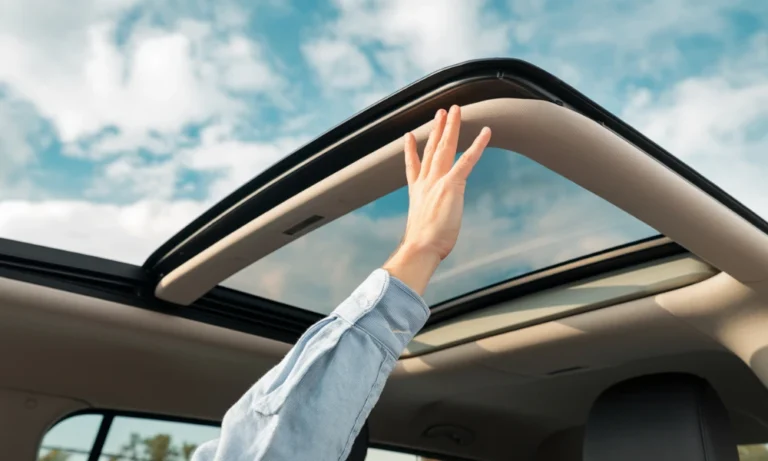
A sunroof that remains open creates an immediate weather problem. If professional repair is not available right away, temporary protection can help reduce exposure to rain and debris.
Move the vehicle to a covered location whenever possible.
If that is not possible, a temporary waterproof covering can be placed over the exterior opening. Secure it carefully so wind cannot pull it away or allow water to collect over the opening.
Do not tape directly across areas where adhesive could damage painted surfaces or seals. Avoid using a covering as a permanent repair.
If water has already entered the vehicle, remove standing water and allow the interior to dry as soon as practical. Persistent moisture can create additional interior problems.
What to Check After Closing the Sunroof
Once you have manually closed the sunroof, do not immediately assume the problem is solved.
Check the following:
- The glass is sitting evenly.
- The panel is fully closed.
- The surrounding seal is not visibly displaced.
- There are no unusual gaps around the glass.
- Nothing is trapped in the sunroof opening.
- The interior trim is properly secured if it was removed.
- The sunroof does not make unusual noises when tested.
If the vehicle’s manual procedure involved resetting the sunroof system, follow the manufacturer’s instructions for that process.
Avoid repeatedly opening and closing a questionable sunroof just to test it. If the mechanism is damaged, unnecessary cycling could make the problem worse.
When to Get Professional Sunroof Repair
Manual closure is generally a way to secure the vehicle, not a substitute for repairing the underlying fault.
Professional inspection is appropriate when:
- The sunroof will not move with the emergency mechanism.
- The glass is crooked or out of alignment.
- The tracks appear damaged.
- The motor runs but the glass does not move.
- You hear grinding, clicking, or other unusual mechanical sounds.
- The sunroof repeatedly gets stuck.
- The glass will not seal properly after closing.
- You cannot locate or operate the emergency mechanism safely.
If the problem involves broken glass, damaged seals, or other areas around the roof opening, professional service can also help determine whether additional work is needed.
For vehicle owners in Austin who need assistance, Texas Reliable Auto Glass can help with sunroof-related concerns. Sunroof Repair in Austin is an option when a stuck or malfunctioning sunroof needs proper inspection rather than continued manual adjustment.

Conclusion
Knowing How To Close A Sunroof Manually can help you secure your vehicle when the normal switch or electrical system stops working. The safest approach is to identify the vehicle-specific emergency mechanism, use the correct tool, move the mechanism slowly, and stop if you encounter unusual resistance.
If the sunroof is physically jammed, misaligned, damaged, or will not seal after manual closure, forcing it further can create a larger repair. In those situations, professional inspection is the better next step so the underlying problem can be identified and repaired correctly.
FAQs
Can I close a sunroof without the switch?
Yes, some vehicles have an emergency manual closing mechanism that allows the sunroof to be operated without the normal switch. The location and procedure vary by vehicle, so check the owner’s manual first.
How do you manually close a sunroof?
A vehicle equipped with a manual emergency drive may allow you to access the sunroof motor and turn the drive with the specified tool. The exact procedure differs between models.
Can I push a stuck sunroof closed by hand?
It is better not to force a stuck sunroof by hand. If the glass or mechanism is jammed, pushing it can damage the tracks, cables, motor, or glass.
What should I do if my sunroof is stuck open?
First, check whether the problem is electrical or mechanical and look for the vehicle’s emergency closing procedure. If manual closure does not work, protect the opening from weather and arrange for professional inspection.
Why does my sunroof close unevenly?
Uneven closure can result from alignment problems, track issues, damaged cables, or other mechanical faults. Do not force one side down to match the other.
Does manually closing a sunroof fix the problem?
Usually, manual closure only secures the roof. The original electrical or mechanical fault may still need to be diagnosed and repaired before the sunroof can be used normally again.