

Replacing windshield wipers sounds simple until you stand in an auto-parts aisle and see dozens of sizes, styles, connectors, and materials. So, what kind of windshield wipers do I need? The answer depends on three main things: the correct blade size, the type of connector your vehicle uses, and the blade design that suits your driving conditions.
You shouldn’t choose a wiper simply because it looks similar to your old one. Vehicle-specific fitment is important, and the driver and passenger sides can require different lengths. Manufacturer fitment guides commonly list the exact sizes and compatible arm types for individual vehicles.
The good news is that finding the right blades doesn’t have to be complicated. Once you know what to check, you can narrow down your choices quickly.
Quick Answer: What Windshield Wipers Do I Need?
Start by finding the exact wiper sizes specified for your vehicle. You can usually find this information in your owner’s manual or through a vehicle-specific wiper-blade finder.
Then check the wiper-arm attachment type and choose a blade style that fits your climate, driving habits, and budget.
A simple process is:
- Identify your vehicle’s year, make, and model.
- Confirm the driver-side and passenger-side blade lengths.
- Check whether your vehicle uses a J-hook, pin, push-button, or another connector.
- Choose conventional, hybrid, or beam-style blades.
- Consider rubber or silicone based on your needs.
- Confirm the exact fit before purchasing.
Don’t assume both front wipers are the same size. Many vehicles use different lengths on the driver and passenger sides. For example, current vehicle-specific fitment listings show different driver/passenger sizes for models such as the Toyota RAV4 and Chevrolet Equinox.
How Do I Know What Size Windshield Wipers I Need?
The easiest way to determine the correct size is to use a vehicle-specific fitment guide or check your owner’s manual.
Enter your:
- Vehicle year
- Make
- Model
- Sometimes the body style or trim
A proper fitment guide can identify the required blade length and, in some cases, the appropriate adapter or arm style.
For example, a vehicle-specific listing may show separate measurements such as driver: 24 inches and passenger: 18 inches rather than recommending one universal size.
Don’t Guess by Measuring Your Old Blade
Measuring the existing blade can sometimes give you a useful reference, but it shouldn’t be your only source of information.
An old blade may have been incorrectly installed, may not be the original size, or may have been replaced with a nonstandard product.
The owner’s manual or a reliable vehicle-specific fitment guide is a better starting point.
What Windshield Wipers Do I Need Beyond the Size?
Finding the correct length answers only one part of the question.
You also need to make sure the blade connects properly to the wiper arm.
Common attachment styles include:
- J-hook
- Pin-style connections
- Push-button systems
- Top-lock or similar mechanisms
- Other vehicle-specific fittings
The exact connector varies by vehicle. Current wiper manufacturers provide separate installation instructions for several arm styles, including large and small J-hooks, pin arms, and push-button-type systems.
This is why a blade can be the correct length but still fail to fit your vehicle.
Correct size + correct connector = proper fit.
What Are the Different Types of Windshield Wipers?
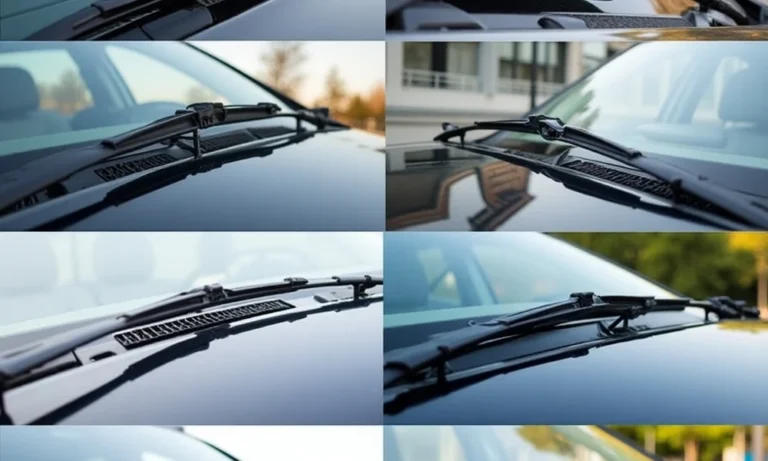
Once you know the size and connector, you can decide which blade design makes sense for your vehicle.
The three common categories are conventional, hybrid, and beam blades.
Conventional Wiper Blades
Conventional blades use a framed structure that supports the rubber wiping element at several points.
They are a straightforward option and are often available at a lower price than more advanced designs.
They can make sense when:
- You want a simple replacement.
- You drive in relatively mild conditions.
- You’re focused on keeping replacement costs down.
- Your vehicle originally uses this style and you are satisfied with its performance.
A lower price doesn’t automatically mean poor performance. What matters is whether the blade fits correctly and maintains good contact with the windshield.
Beam Wiper Blades
Beam blades use a more flexible design intended to maintain contact with the windshield across its surface.
Instead of relying on a traditional exposed metal frame, beam-style construction uses a continuous or integrated structure to distribute pressure along the blade.
This design can be useful on vehicles with more curved windshields and in demanding weather conditions.
Rain-X describes beam blades as providing more even pressure distribution than conventional designs, while its current product range includes beam, hybrid, and conventional categories.
Who Might Prefer Beam Blades?
Beam blades may be worth considering if you:
- Drive frequently in heavy rain.
- Deal with snow or ice.
- I want an aerodynamic design.
- Prefer a premium-style blade.
- Notice conventional blades losing contact with parts of the windshield.
That doesn’t mean every driver needs a beam blade. Vehicle fit and your driving environment should guide the decision.
Hybrid Wiper Blades
Hybrid blades combine characteristics of conventional and beam designs.
They generally use a supportive frame or structure along with an aerodynamic outer covering.
They can be a useful middle-ground choice for drivers who want more protection and a modern design without necessarily choosing the most premium option available.
The important point is that the blade category should come after fitment.
There’s little benefit in choosing an expensive hybrid blade if it doesn’t correctly match your vehicle.
What Kind of Wiper Blades Do I Need for Heavy Rain?
If you frequently drive in heavy rain, maintaining consistent contact between the blade and windshield is especially important.
A beam-style blade can be worth considering because its design is intended to distribute pressure more evenly across the windshield. Rain-X specifically identifies beam-style blades as an option for heavy-rain conditions.
However, don’t overlook the windshield itself.
A dirty windshield, worn blade, residue, or an existing water-repellent coating can affect wiping performance. Cleaning the glass and inspecting the blade should be part of troubleshooting before assuming you need a more expensive wiper.
What Are the Best Kind of Windshield Wipers for Hot Weather?

Hot weather exposes wiper blades to sunlight, heat, and UV exposure.
If you live somewhere with strong sun for much of the year, material durability becomes an important consideration.
Silicone blades are often marketed for greater resistance to heat, UV exposure, and ozone compared with traditional natural rubber. Rain-X’s current guidance notes these durability differences between silicone and natural rubber.
That doesn’t mean silicone is automatically necessary for every car.
Consider:
- How much your vehicle sits outdoors
- Local temperatures
- Sun exposure
- How frequently you use your wipers
- Your replacement budget
A correctly fitted, well-maintained rubber blade can still be a perfectly reasonable choice.
You can read about Is Windshield Wiper Fluid Flammable.
Rubber vs. Silicone Windshield Wipers
The wiping material matters too.
Rubber Blades
Traditional rubber blades are widely available and can be a practical, economical choice.
They may be suitable if:
- You want an affordable replacement.
- Your climate is moderate.
- You replace blades regularly.
- You don’t need specialized features.
Silicone Blades
Silicone blades are generally positioned as a longer-lasting option with greater resistance to environmental exposure.
They may appeal to drivers who:
- Park outside frequently.
- Experience strong heat and sunlight.
- I want to prioritize durability.
- Drive in demanding weather.
The decision doesn’t need to be complicated. First make sure the blade fits your vehicle; then decide whether the additional material features are worthwhile for your driving conditions.
What Type of Windshield Wipers Do I Need for Winter?
Winter driving creates additional challenges because ice, snow, freezing temperatures, and road grime can interfere with the wiper blade.
Before using the wipers, remove accumulated ice or snow from the windshield rather than relying on the blades to break through it.
For winter conditions, a blade designed to maintain contact with the windshield can be useful. Beam-style blades are one option because they don’t use the same exposed frame design as conventional blades.
Your washer fluid also matters. Use fluid appropriate for your climate rather than relying on plain water during freezing conditions.
How Do I Know When My Windshield Wipers Need Replacing?
Your wipers don’t need to look completely destroyed before replacement becomes necessary.
Watch for:
Streaking
If the blade leaves lines of water behind instead of clearing the glass cleanly, inspect the rubber edge.
Skipping
A blade that jumps across the windshield instead of moving smoothly may have worn rubber, contamination, or inconsistent contact with the glass.
Chattering
A repeated squeaking or chattering motion can indicate that the blade isn’t maintaining smooth contact.
Splitting or Cracking
Look closely at the rubber edge. Cracks, splits, or damaged sections are clear reasons to replace the blade.
Poor Visibility
If the wipers leave a film or smeared areas that interfere with your view, don’t ignore the problem especially before driving in rain.
Rain-X notes that dirt on the windshield, worn rubber, and uneven pressure can contribute to skipping, streaking, and chattering.
How to Choose the Best Kind of Windshield Wipers
Instead of asking which blade is universally “best,” use your own vehicle and driving conditions to narrow down the choice.
Choose Conventional If:
You want a simple, budget-conscious replacement and your vehicle is compatible with this design.
Choose Hybrid If:
You want a combination of conventional support and a more enclosed aerodynamic design.
Choose Beam If:
You frequently drive in rain, snow, or other challenging weather and prefer a design that distributes pressure more evenly.
Consider Silicone If:
You prioritize durability and your vehicle experiences significant heat, sunlight, or UV exposure.
The best kind of windshield wipers for you are ultimately the ones that correctly fit your vehicle and provide clear, consistent wiping for the conditions in which you actually drive.
Common Mistakes When Buying Windshield Wipers
Buying Based Only on Price
The cheapest blade isn’t necessarily the best value if it doesn’t perform well or fit correctly.
At the same time, the most expensive blade isn’t automatically necessary.
Start with compatibility.
Assuming Both Front Wipers Are the Same Size
They may not be.
Always check the driver and passenger specifications separately.
Forgetting the Rear Wiper
SUVs, hatchbacks, and some other vehicles have a rear wiper that uses a separate size and blade design.
Don’t assume the rear blade matches either front blade.
Choosing a Universal Blade Without Checking the Adapter
Some products come with multiple adapters, but you still need to confirm that the included adapter is compatible with your vehicle.
Ignoring the Windshield
If your windshield has chips, cracks, heavy pitting, or surface damage, changing the wipers may not solve every visibility problem.
What If I Still Don't Know What Windshield Wipers I Need?
If you’re still asking “what windshield wipers do I need?”, don’t guess.
Have these details available:
- Year
- Make
- Model
- Body style, if applicable
- Driver-side blade size
- Passenger-side blade size
- Rear blade size, if applicable
- Wiper-arm connector
A vehicle-specific lookup tool can simplify the process. Rain-X, for example, provides vehicle-specific blade information that can include driver/passenger sizes and arm types.
Your owner’s manual is another reliable reference.
When the Problem Isn't the Wiper Blades
Sometimes drivers replace their wipers repeatedly because they assume the blade is responsible for every visibility problem.
But the windshield itself can be part of the issue.
Deep scratches, chips, cracks, heavy pitting, or other glass damage can affect visibility and may prevent a new wiper from producing the result you expect.
If the windshield has significant damage, have the glass professionally evaluated rather than repeatedly replacing blades.
For drivers looking for Windshield Replacement in Austin, TX, professional auto-glass service may be appropriate when windshield damage cannot be resolved through cleaning or a simple wiper replacement.
Texas Reliable Auto Glass can be considered when you need professional attention to windshield-related problems beyond routine wiper replacement.

Final Thoughts
Finding the right windshield wipers is easier when you separate the decision into three questions:
What size do I need? What connector does my vehicle use? What blade design suits my driving conditions?
Start with the vehicle-specific size rather than guessing. Then confirm the attachment style and decide whether conventional, hybrid, beam, rubber, or silicone construction makes sense for your needs.
If you’re asking “what kind of wiper blades do I need?”, remember that the most advanced blade isn’t useful if it doesn’t fit your vehicle correctly.
And if poor visibility continues even after installing the correct blades, inspect the windshield itself. Glass damage, contamination, and surface wear can sometimes be the real reason your wipers aren’t delivering a clear wipe.
Frequently Asked Questions
What kind of wiper blades do I need?
You need blades that match your vehicle’s specified length and wiper-arm connector. After confirming fitment, choose between conventional, hybrid, or beam designs based on your driving conditions and preferences.
How do I know what size windshield wipers I need?
Check your vehicle’s owner’s manual or use a vehicle-specific wiper blade finder. Don’t assume the driver and passenger sides use the same length.
What is the best kind of windshield wiper for rain?
Beam-style blades can be a useful choice for heavy rain because their design is intended to maintain more consistent pressure across the windshield. The correct size and fit remain essential.
Are silicone wiper blades better than rubber?
Silicone blades can offer greater resistance to heat, UV exposure, and ozone, while rubber blades are generally a more economical option. The right choice depends on your climate, vehicle use, and budget.
Can I use a longer wiper blade than recommended?
Don’t intentionally substitute a longer blade simply because it appears to cover more glass. An incorrect length can interfere with the other wiper, windshield trim, or the vehicle’s intended wiping pattern.
Use the manufacturer’s specified size.
Should both windshield wipers be the same size?
Not necessarily. Many vehicles use different driver- and passenger-side lengths, so check the specifications for each side individually.
How often should I replace windshield wipers?
Replacement depends on the blade material, weather exposure, usage, and condition. Instead of relying only on a calendar, inspect the blades for streaking, skipping, cracking, splitting, or poor contact.
Why are my wipers noisy?
Squeaking or chattering can result from dirty glass, contaminated blades, worn rubber, or inconsistent contact with the windshield. Cleaning both surfaces may help; persistent problems can indicate that the blades need replacement.